When you're building a website, budget is often the first real constraint.
Whether you're a startup founder trying to validate an idea, a freelancer launching your portfolio, or a creator building your online presence, spending thousands on design and development doesn’t always make sense early on.
That’s where framer templates under $100 become a smart, practical solution.
Instead of starting from scratch or hiring a developer, you can use pre-built templates that are:
Professionally designed
easy to customize
ready to launch quickly
This price range is ideal for:
early-stage startups
solo founders
small agencies
creators testing ideas
But here’s the important part — under $100 doesn’t mean low quality.
You can still get:
modern UI design
responsive layouts
structured pages
even CMS support in some cases
The key is choosing the right template based on your needs — not just the price.
Benefits of Templates Under $100
Choosing templates in this range is less about “cheap” and more about “efficient.”
1. Cost-Efficiency for Early-Stage Businesses
When you’re just starting, your priority should be:
👉 launching fast, not spending big
Templates under $100 allow you to:
reduce upfront costs
avoid hiring designers/developers
test ideas with minimal risk
This is especially valuable for:
MVPs
side projects
personal brands
2. Faster Website Launch
Time-to-market matters more than perfection.
With these templates, you can:
go live in days (not weeks)
skip design iterations
focus on messaging and growth
For example:
A SaaS founder can launch a landing page in a weekend instead of waiting a month.
3. High ROI Compared to Custom Builds
Custom websites can cost:
$1,000 to $10,000+
Templates under $100 offer:
similar visual quality
essential functionality
immediate usability
Even one client or conversion can recover your cost.
4. Accessibility for Beginners
You don’t need to be a developer.
Most affordable framer templates are:
beginner-friendly
easy to edit
flexible enough for non-technical users
This lowers the barrier to entry significantly.
What to Expect at This Price Point
Understanding expectations helps you choose smarter.
1. Modern Design Quality
Most templates in this range still offer:
clean layouts
modern typography
good spacing
They may be simpler — but they’re still professional.
2. Core Features Included
You can expect:
homepage + key pages
reusable sections
responsive design
Some templates also include:
CMS/blog functionality
landing page variations
3. Responsive & Mobile-Ready Layouts
Nearly all templates are:
optimized for mobile
adaptable across devices
This is essential for conversions and SEO.
4. Limitations to Be Aware Of
At this price, you may not get:
advanced animations
deep integrations
complex UI systems
Customization may also be:
slightly limited
more manual
5. Balanced Simplicity
Think of this range as:
👉 “lean, fast, and effective”
Perfect for launching — not overengineering.
Best Framer Templates Under $100
Metony
Overview: A flexible, growth-ready template with a strong foundation for content and SaaS websites.
Best use case: Startups and businesses planning long-term scalability.
Key features:
CMS support
structured content sections
clean multi-page layout
Why it’s worth the price:
Metony stands out because it doesn’t feel like a “budget” template. It’s built to scale, making it a smart choice even if you plan to grow beyond MVP stage.
SaaSify
Overview: A conversion-focused template designed for SaaS products.
Best use case: SaaS startups looking to drive demos and signups.
Key features:
strong CTA sections
feature breakdown blocks
pricing layout
Why it’s worth the price:
SaaSify is optimized for conversions. If your goal is to turn visitors into users, this template delivers more value than most in this price range.
Synco
Overview: A visually bold template with modern UI elements.
Best use case: Creative startups and design-focused brands.
Key features:
dynamic layouts
strong visual hierarchy
engaging design
Why it’s worth the price:
Synco helps you stand out visually without increasing your budget — ideal for brands that rely on design impact.
Vinency
Overview: A clean, personal-brand-focused template.
Best use case: Coaches, consultants, and freelancers.
Key features:
testimonial sections
personal storytelling layout
trust-building UI
Why it’s worth the price:
Vinency is built for credibility. It helps convert visitors into clients through trust and clarity.
Hubstore
Overview: A structured, feature-rich template suitable for complex products.
Best use case: SaaS platforms or multi-feature businesses.
Key features:
modular sections
product explanation blocks
scalable layout
Why it’s worth the price:
Hubstore supports complexity better than most templates in this range, making it ideal for products that need detailed explanation.
Findays
Overview: Minimalist template focused on clarity and usability.
Best use case: Personal websites and simple landing pages.
Key features:
clean layout
easy readability
simple customization
Why it’s worth the price:
Findays removes unnecessary complexity and focuses on what matters — clarity and usability.
ClayAI
Overview: A futuristic template tailored for AI and tech startups.
Best use case: AI products, tech startups, innovation-driven brands.
Key features:
modern aesthetic
structured sections
strong visual identity
Why it’s worth the price:
ClayAI positions your brand as cutting-edge, which is crucial in competitive tech markets.
Pentos
Overview: Lightweight and efficient template designed for fast launches.
Best use case: MVPs and early-stage startups.
Key features:
simple structure
fast setup
flexible layout
Why it’s worth the price:
Pentos is perfect when speed matters more than complexity — launch fast, iterate later.
How to Choose Within This Budget
Choosing the right template under $100 is about prioritization.
1. Match Template to Your Business Type
SaaS → SaaSify or Hubstore
Personal brand → Vinency
Creative → Synco
Simple site → Findays
2. Prioritize Features Over Design Alone
Don’t just pick what looks good.
Ask:
Does it support my goal?
Can it convert users?
3. Understand Trade-Offs
At this price:
you gain speed and affordability
you lose some advanced features
This is a fair trade for most early-stage users.
4. Think Long-Term
Even if you’re starting small:
can the template grow with you?
can you add content later?
Templates like Metony and Hubstore are strong here.
5. Keep It Simple
Overcomplicating early stages slows you down.
Focus on:
👉 launching → learning → improving
FAQs
Are cheap Framer templates good?
Yes. Many offer excellent design and functionality for their price.
Can I build a professional website under $100?
Absolutely. With the right template and content, your website can look fully professional.
Are these templates SEO-friendly?
Yes. Most templates support proper structure, responsiveness, and SEO basics.
Can I customize these templates?
Yes. You can adjust layouts, content, and branding easily.
Can I scale later?
Yes. Many templates allow expansion, especially those with CMS support.
You don’t need a large budget to build a strong online presence.
The right framer templates under $100 allow you to:
launch quickly
maintain professional design
test and grow your idea
Instead of waiting for the “perfect moment,” you can start now — and evolve your website as your business grows.
At this stage, the smartest move is:
👉 take action
👉 stay lean
👉 build momentum
👉 Explore Framer templates under $100 to launch your website affordably.
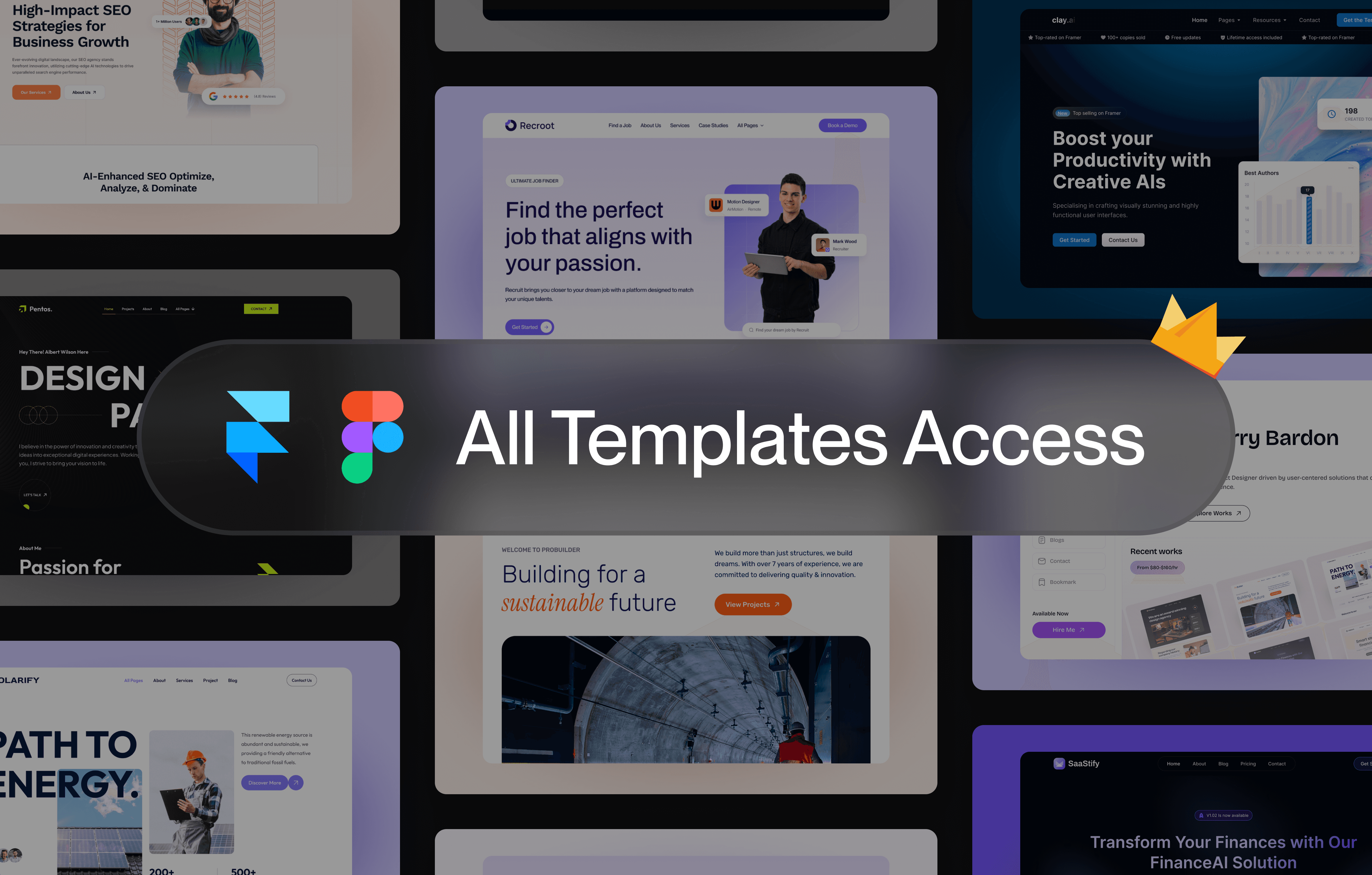

Access 50+ Framer Templates

Access 20+ webflow Templates

Access 60+ Figma Templates

1500+
trusted us