🔥 SECTION 1 — Buyer-Focused Introduction
Most websites don’t fail because of design—they fail because nothing connects.
Leads come in, but they don’t reach your CRM. Users sign up, but emails aren’t triggered. Payments happen, but data isn’t tracked properly. When your tools are disconnected, growth slows down fast.
Modern websites are no longer standalone pages. They are part of a larger system—connected to email platforms, analytics tools, payment gateways, and automation workflows.
That’s why integrations are no longer optional.
The best webflow templates with integrations are built to work with your tools from day one. Instead of manually connecting everything later (and risking errors), you start with a structure that supports automation and scalability.
This is especially important for:
SaaS platforms managing users and leads
marketing funnels capturing and nurturing prospects
ecommerce stores processing payments
creators building automated workflows
With the right template, your website becomes more than a frontend—it becomes part of your growth engine.
🧠 SECTION 2 — Why Integrations Matter in Templates
Integrations turn a website into a working system.
Connecting Tools and Workflows
Your website should connect seamlessly with:
CRM systems
email platforms
analytics tools
This ensures every action a user takes is captured and used effectively.
Automating Processes
Instead of manual work, integrations allow you to:
send emails automatically
track user behavior
trigger workflows
This saves time and reduces human error.
Improving Efficiency and Scalability
As your business grows, manual processes become unsustainable. Integrated systems scale with you.
Enhancing User Experience
Users expect instant responses:
confirmation emails
onboarding flows
payment success feedback
Integrations make this possible.
Enabling Advanced Functionality Without Coding
You don’t need to build everything from scratch. With the right setup, you can create powerful systems using tools that already exist.
This is why webflow integration templates are valuable—they give you a foundation that supports growth from the start.
⚡ SECTION 3 — Quick Recommendation
Goal | Best Template |
|---|---|
SaaS + automation | SaaSify |
Marketing funnel | Hubstore |
Scalable website | Metony |
Simple integrations | Pentos |
🧩 SECTION 4 — What to Look For in Integration Templates
Not all templates are built with integrations in mind. Here’s what to prioritize.
CRM Integrations
Your website should easily connect with tools like HubSpot or similar systems. This ensures:
lead capture
contact management
pipeline tracking
Email Tools
Look for compatibility with platforms like Mailchimp or ConvertKit. This enables:
newsletters
automation sequences
onboarding emails
Payment Integrations
If you’re selling products or services, you need:
Stripe
Lemon Squeezy
or similar tools
A good template supports smooth checkout flows.
Analytics and Tracking
Without tracking, you’re guessing. Templates should support:
GA4
event tracking
conversion tracking
API and Webhook Compatibility
Advanced workflows often rely on APIs or webhooks. This allows you to connect custom systems or automation tools.
Third-Party Tool Flexibility
Your stack will evolve. A strong template should not limit which tools you can use.
The best webflow templates for integrations are flexible, scalable, and ready for real-world workflows.
🏆 SECTION 5 — Best Webflow Templates With Integrations
Metony
Metony is built for complex, scalable setups.
It supports multiple content types and integrates smoothly with various tools, making it ideal for businesses that need flexibility.
Best use case: multi-tool, scalable websites
Key integration features: flexible CMS, API compatibility, structured layouts
Why it stands out: adapts to different workflows without breaking structure
SaaSify
SaaSify is designed for automation-heavy environments.
It connects well with CRM systems, email tools, and analytics platforms, making it ideal for SaaS growth.
Best use case: SaaS platforms and automation workflows
Key integration features: lead capture integration, onboarding flows, tracking support
Why it stands out: built with conversion and automation in mind
Synco
Synco focuses on interactive and connected experiences.
It works well for brands that rely on integrations to support storytelling and user journeys.
Best use case: creative and tech-driven websites
Key integration features: dynamic content handling, flexible tool connections
Why it stands out: blends design with functionality
Vinency
Vinency is ideal for creators and personal brands.
It integrates smoothly with email platforms and simple automation tools, making it perfect for audience growth.
Best use case: creators and personal brands
Key integration features: email capture integrations, simple workflows
Why it stands out: easy to manage without complexity
Hubstore
Hubstore is built for marketing systems.
It works well with CRM tools and email platforms, making it ideal for lead generation funnels.
Best use case: marketing funnels and content-driven websites
Key integration features: CRM compatibility, email workflows, analytics integration
Why it stands out: optimized for lead capture and nurturing
Findays
Findays offers a clean and simple integration setup.
It’s perfect for users who want essential integrations without dealing with complex configurations.
Best use case: small businesses and simple websites
Key integration features: basic email and analytics integrations
Why it stands out: simplicity and ease of use
ClayAI
ClayAI is built for advanced tech products.
It supports integrations needed for AI tools, APIs, and complex workflows.
Best use case: AI startups and tech platforms
Key integration features: API compatibility, advanced tracking
Why it stands out: handles complex integrations effectively
Pentos
Pentos is lightweight and practical.
It supports essential integrations while keeping things simple and fast.
Best use case: MVPs and quick-launch websites
Key integration features: basic CRM and email integrations
Why it stands out: fast setup with minimal effort
🧠 SECTION 6 — Which Template Should You Choose
Your choice depends on how complex your setup is.
If you want SaaS automation → SaaSify
If you want marketing funnel → Hubstore
If you want flexibility → Metony
If you want simplicity → Pentos
If you want creator workflows → Vinency
If you want advanced integrations → ClayAI
Think about your current tools—and what you might need later.
🎯 SECTION 7 — Decision Framework
Goal | Best Template |
|---|---|
SaaS + automation | SaaSify |
Marketing funnel | Hubstore |
Scalable website | Metony |
Simple integrations | Pentos |
🧩 SECTION 4 — What to Look For in Integration Templates
Not all templates are built with integrations in mind. Here’s what to prioritize.
CRM Integrations
Your website should easily connect with tools like HubSpot or similar systems. This ensures:
lead capture
contact management
pipeline tracking
Email Tools
Look for compatibility with platforms like Mailchimp or ConvertKit. This enables:
newsletters
automation sequences
onboarding emails
Payment Integrations
If you’re selling products or services, you need:
Stripe
Lemon Squeezy
or similar tools
A good template supports smooth checkout flows.
Analytics and Tracking
Without tracking, you’re guessing. Templates should support:
GA4
event tracking
conversion tracking
API and Webhook Compatibility
Advanced workflows often rely on APIs or webhooks. This allows you to connect custom systems or automation tools.
Third-Party Tool Flexibility
Your stack will evolve. A strong template should not limit which tools you can use.
The best webflow templates for integrations are flexible, scalable, and ready for real-world workflows.
🏆 SECTION 5 — Best Webflow Templates With Integrations
Metony
Metony is built for complex, scalable setups.
It supports multiple content types and integrates smoothly with various tools, making it ideal for businesses that need flexibility.
Best use case: multi-tool, scalable websites
Key integration features: flexible CMS, API compatibility, structured layouts
Why it stands out: adapts to different workflows without breaking structure
SaaSify
SaaSify is designed for automation-heavy environments.
It connects well with CRM systems, email tools, and analytics platforms, making it ideal for SaaS growth.
Best use case: SaaS platforms and automation workflows
Key integration features: lead capture integration, onboarding flows, tracking support
Why it stands out: built with conversion and automation in mind
Synco
Synco focuses on interactive and connected experiences.
It works well for brands that rely on integrations to support storytelling and user journeys.
Best use case: creative and tech-driven websites
Key integration features: dynamic content handling, flexible tool connections
Why it stands out: blends design with functionality
Vinency
Vinency is ideal for creators and personal brands.
It integrates smoothly with email platforms and simple automation tools, making it perfect for audience growth.
Best use case: creators and personal brands
Key integration features: email capture integrations, simple workflows
Why it stands out: easy to manage without complexity
Hubstore
Hubstore is built for marketing systems.
It works well with CRM tools and email platforms, making it ideal for lead generation funnels.
Best use case: marketing funnels and content-driven websites
Key integration features: CRM compatibility, email workflows, analytics integration
Why it stands out: optimized for lead capture and nurturing
Findays
Findays offers a clean and simple integration setup.
It’s perfect for users who want essential integrations without dealing with complex configurations.
Best use case: small businesses and simple websites
Key integration features: basic email and analytics integrations
Why it stands out: simplicity and ease of use
ClayAI
ClayAI is built for advanced tech products.
It supports integrations needed for AI tools, APIs, and complex workflows.
Best use case: AI startups and tech platforms
Key integration features: API compatibility, advanced tracking
Why it stands out: handles complex integrations effectively
Pentos
Pentos is lightweight and practical.
It supports essential integrations while keeping things simple and fast.
Best use case: MVPs and quick-launch websites
Key integration features: basic CRM and email integrations
Why it stands out: fast setup with minimal effort
🧠 SECTION 6 — Which Template Should You Choose
Your choice depends on how complex your setup is.
If you want SaaS automation → SaaSify
If you want marketing funnel → Hubstore
If you want flexibility → Metony
If you want simplicity → Pentos
If you want creator workflows → Vinency
If you want advanced integrations → ClayAI
Think about your current tools—and what you might need later.
🎯 SECTION 7 — Decision Framework
Situation | Best Choice |
|---|---|
SaaS + automation workflows | SaaSify |
Lead generation funnel | Hubstore |
Multi-tool scalable website | Metony |
Simple integrations setup | Pentos |
Creator email workflows | Vinency |
⚠️ SECTION 8 — Common Mistakes
Using Too Many Tools
More tools don’t always mean better results. Keep your stack focused.
Poor Integration Setup
Incorrect connections can break workflows and lead to lost data.
Broken Data Flow
If tools don’t communicate properly, you lose visibility into your business.
Ignoring Performance
Too many scripts can slow down your website.
Lack of Tracking
Without analytics, you don’t know what’s working.
❓ SECTION 9 — FAQs
Do Webflow templates support integrations?
Yes. Most templates support integration with CRM, email, and analytics tools.
Can I connect CRM and email tools?
Yes. You can integrate tools like HubSpot, Mailchimp, and others.
Are integration templates beginner-friendly?
Many are designed to be easy to set up, even without technical skills.
Can I add payment integrations easily?
Yes. Tools like Stripe can be connected for payments.
Do integrations affect website performance?
They can, if overused. Optimized templates minimize this impact.
Do I need coding knowledge?
No. Most integrations can be set up using no-code tools.
🚀 SECTION 10 — Conclusion
A modern website is more than design—it’s a system.
The right webflow templates with integrations help you:
connect your tools
automate workflows
improve efficiency
scale your business
Instead of struggling with disconnected systems, you can start with a structure that supports growth from day one.
Choose a template that fits your current needs—but also supports where you’re going next.
👉 Explore Webflow templates with integrations to connect your tools and build scalable, automated websites.
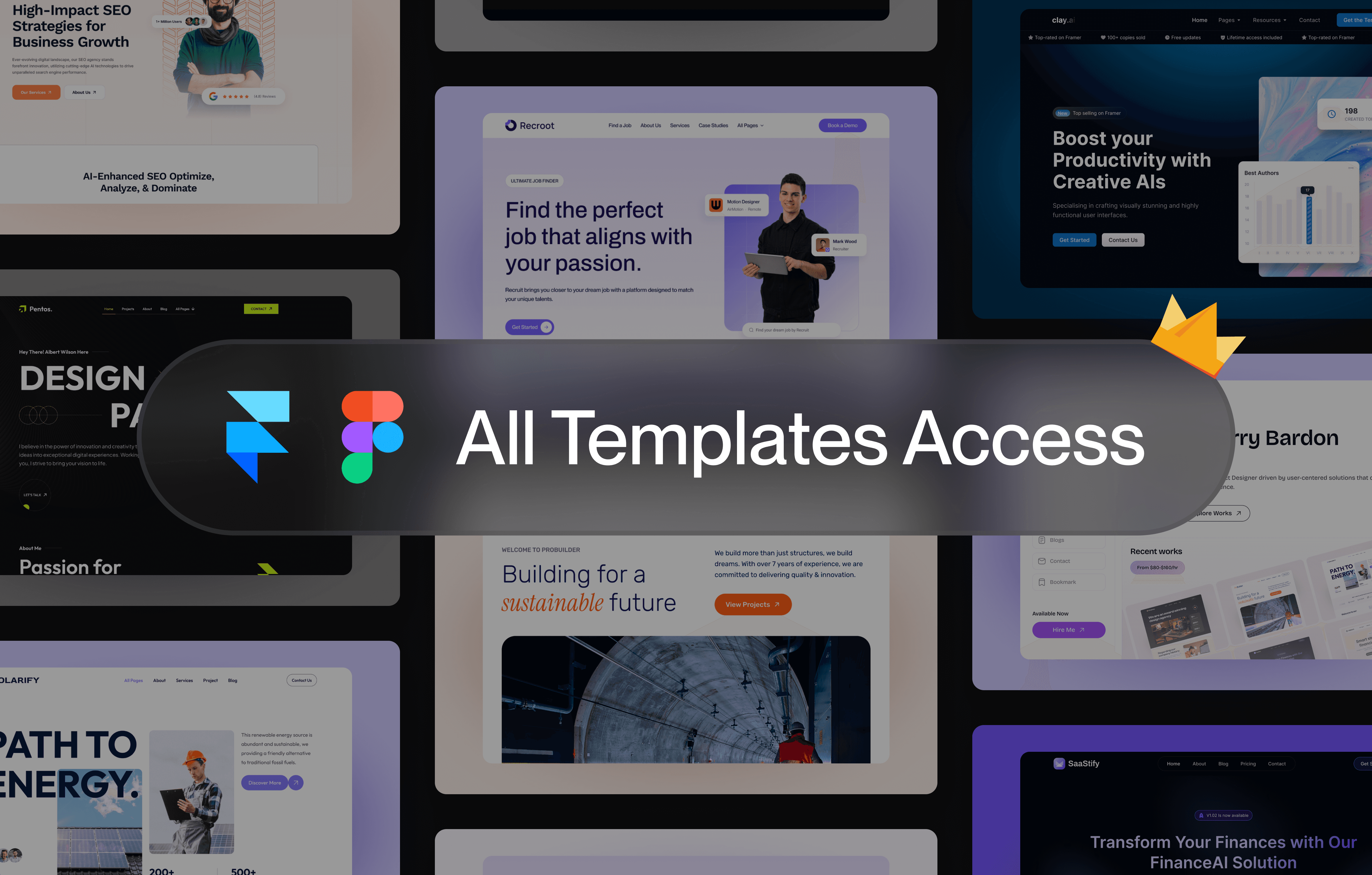

Access 50+ Framer Templates

Access 20+ webflow Templates

Access 60+ Figma Templates

1500+
trusted us