🔥 SECTION 1 — Buyer-Focused Introduction
Most websites don’t have a traffic problem—they have a conversion problem.
Users land on your page, explore your product or service, and then leave without taking action. One of the biggest reasons? Pricing confusion.
If users don’t clearly understand what you offer, how much it costs, and which option is right for them, they hesitate—and hesitation kills conversions.
This is where structured pricing tables become essential.
The best webflow templates with pricing table are designed to remove friction from decision-making. Instead of forcing users to figure things out, they present pricing in a clear, visual, and easy-to-compare format.
This matters across different use cases:
SaaS subscription plans with multiple tiers
agency service packages
digital product pricing
membership or course tiers
A well-designed pricing table does more than show numbers—it guides users toward the right choice.
If your goal is to increase signups, sales, or inquiries, starting with a template that handles pricing properly can make a significant difference.
🧠 SECTION 2 — Why Pricing Tables Matter in Templates
Pricing is often the most important section of your website—and the most overlooked.
Clarity Improves Conversions
Users need to understand your offer instantly. A structured pricing table simplifies this by presenting options side by side.
Simplifies Decision-Making
Instead of analyzing scattered information, users can:
compare plans
evaluate features
choose quickly
This reduces friction and speeds up decisions.
Builds Trust and Transparency
Clear pricing signals confidence. When users see structured plans, they feel more comfortable moving forward.
Highlights Value Differences
A good pricing table shows not just price—but value. It makes it easy to understand:
what each plan includes
why higher tiers cost more
which option is best
Increases Signup and Purchase Rates
When users understand what they’re getting, they’re more likely to convert.
That’s why webflow pricing table templates are so important—they’re built to guide users toward action, not confusion.
⚡ SECTION 3 — Quick Recommendation
Goal | Best Template |
|---|---|
SaaS pricing pages | SaaSify |
Service pricing | Vinency |
Scalable business site | Metony |
Simple pricing layout | Pentos |
🧩 SECTION 4 — What to Look For in Pricing Table Templates
A pricing table is only effective if it’s designed properly.
Clear Pricing Tiers
Your template should support structured plans like:
Basic
Pro
Enterprise
This makes comparison easy.
Feature Comparison Layout
Users should be able to quickly see what each plan includes. Bullet points or checklists work best.
CTA Placement Inside Pricing Cards
Each pricing tier should include a clear action:
“Start Free Trial”
“Get Started”
“Choose Plan”
Monthly/Yearly Toggle
Many businesses offer billing options. A toggle makes it easy to compare pricing.
Visual Hierarchy
Highlighting a “recommended” plan helps guide users toward your preferred option.
Mobile Responsiveness
Pricing tables must work well on mobile devices. Poor layout can break conversions.
Customization Flexibility
You should be able to adjust pricing, features, and layout easily as your business evolves.
The best pricing table webflow templates combine clarity with flexibility.
🏆 SECTION 5 — Best Webflow Templates With Pricing Table
Metony
Metony is built for flexibility and scale.
Its pricing tables are structured to support multiple plans and product types, making it ideal for growing businesses.
Best use case: scalable SaaS or multi-product websites
Key pricing features: multi-tier layouts, customizable sections, clean hierarchy
Why it stands out: adapts easily as pricing models evolve
SaaSify
SaaSify is designed specifically for SaaS conversions.
Its pricing tables are optimized to highlight value, guide users, and increase signups.
Best use case: SaaS subscription models
Key pricing features: feature comparison, highlighted plan, CTA-focused design
Why it stands out: built for high-conversion pricing pages
Synco
Synco adds a creative touch to pricing.
It blends visual storytelling with structured pricing, making it ideal for brands that want a unique presentation.
Best use case: creative and tech-driven websites
Key pricing features: dynamic layouts, visually engaging pricing sections
Why it stands out: combines design with clarity
Vinency
Vinency is perfect for service-based businesses.
Its pricing tables are simple, clear, and focused on communicating value.
Best use case: agencies and consultants
Key pricing features: service breakdown, clean structure, strong CTA placement
Why it stands out: easy for clients to understand offerings
Hubstore
Hubstore is built for content-driven platforms.
Its pricing sections integrate well with larger site structures, making it suitable for complex offerings.
Best use case: content platforms with paid tiers
Key pricing features: structured plans, flexible layout
Why it stands out: works well with large-scale websites
Findays
Findays keeps pricing simple.
It’s ideal for businesses that don’t need complex pricing structures.
Best use case: small businesses or single-offer websites
Key pricing features: minimal pricing cards, clean layout
Why it stands out: simplicity and ease of use
ClayAI
ClayAI is tailored for advanced products.
Its pricing tables support complex feature breakdowns, making it ideal for AI and tech solutions.
Best use case: AI startups and advanced SaaS
Key pricing features: detailed feature comparison, structured tiers
Why it stands out: handles complex pricing clearly
Pentos
Pentos is lightweight and efficient.
It offers simple pricing layouts that are quick to set up and easy to manage.
Best use case: MVPs and early-stage businesses
Key pricing features: basic pricing cards, fast implementation
Why it stands out: speed and simplicity
🧠 SECTION 6 — Which Template Should You Choose
Choosing the right template depends on your pricing model.
If you want SaaS pricing → SaaSify
If you want service pricing → Vinency
If you want flexibility → Metony
If you want simplicity → Pentos
If you want creative presentation → Synco
If you want scalability → Hubstore
Think about how your users will evaluate your pricing.
🎯 SECTION 7 — Decision Framework
Situation | Best Choice |
|---|---|
SaaS subscription pricing | SaaSify |
Agency/service pricing | Vinency |
Multi-product business | Metony |
Simple pricing setup | Pentos |
Complex feature comparison | ClayAI |
⚠️ SECTION 8 — Common Mistakes
Unclear Pricing Structure
If users don’t understand your plans, they won’t convert.
Too Many Pricing Options
Too many choices can overwhelm users and delay decisions.
Weak CTA in Pricing Section
Without a strong call-to-action, users may leave without acting.
Not Highlighting Best Plan
Guiding users toward a recommended option improves conversions.
Confusing Feature Comparisons
If features are unclear, users won’t see the value.
❓ SECTION 9 — FAQs
Do Webflow templates include pricing tables?
Yes. Many templates include built-in pricing sections for displaying plans.
Can I customize pricing tables easily?
Yes. You can modify pricing, features, and layout without coding.
Are pricing tables good for conversions?
Yes. Clear pricing improves decision-making and increases conversions.
Can I add subscription pricing?
Yes. Templates can support subscription models with proper integration.
Are pricing templates beginner-friendly?
Yes. Most templates are designed for easy setup.
Do I need technical knowledge?
No. Webflow allows visual editing without coding.
🚀 SECTION 10 — Conclusion
Pricing is where decisions happen.
The right webflow templates with pricing table help you:
present your offer clearly
guide users toward the right plan
increase conversions and revenue
Instead of confusing your visitors, you give them a clear path forward.
Choose a template that aligns with your business model, highlights your value, and makes it easy for users to say yes.
👉 Explore Webflow templates with pricing tables to increase conversions and drive more sales.
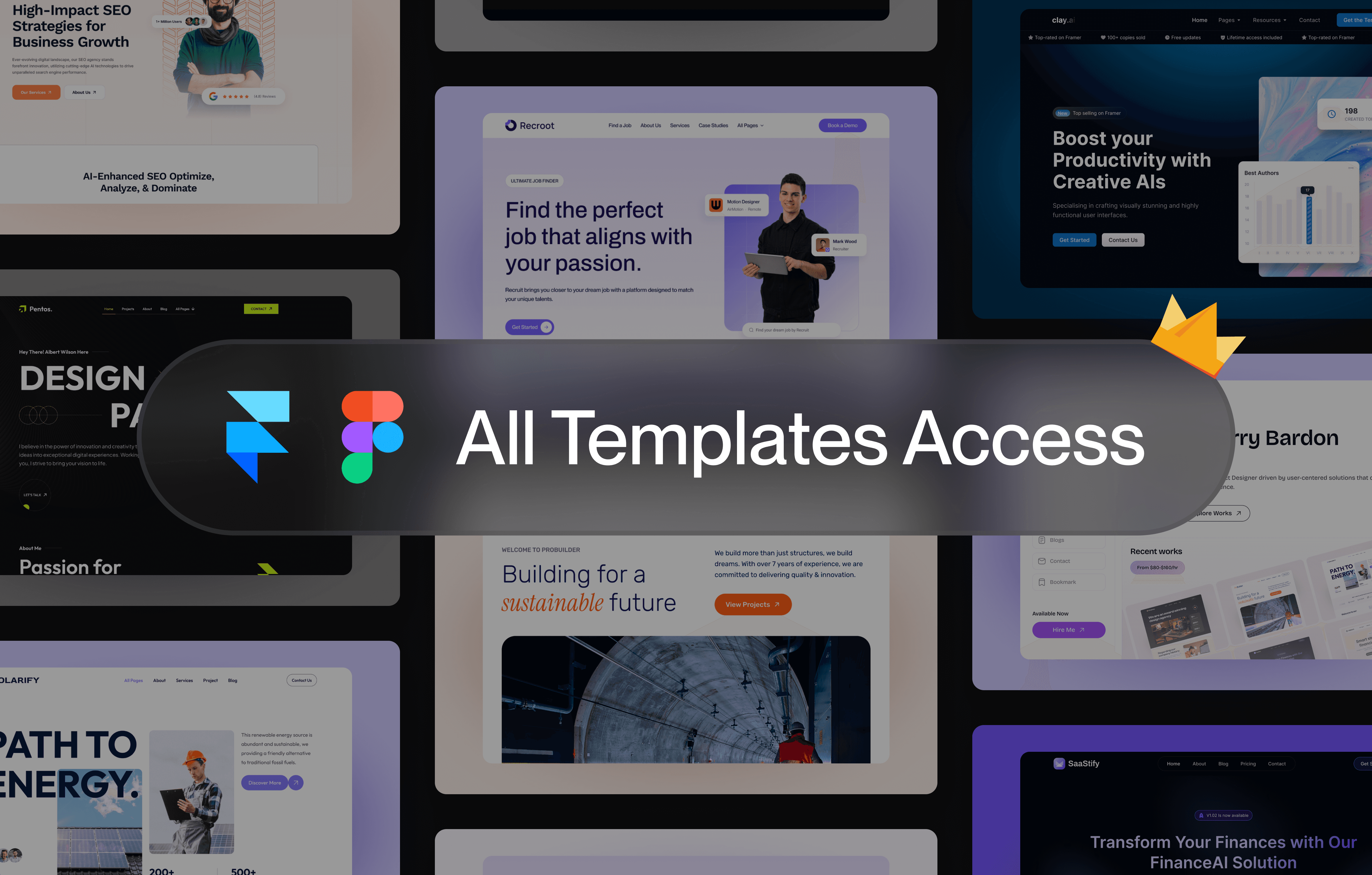

Access 50+ Framer Templates

Access 20+ webflow Templates

Access 60+ Figma Templates

1500+
trusted us