Webflow vs Wix
Webflow vs Wix
Webflow vs Wix is a practical comparison for anyone deciding between ease of use and long-term control. Wix is great for simple, quick websites and beginner-friendly editing. Webflow is stronger when you need custom layouts, scalable CMS structure, and a more polished front-end experience. The right choice depends on how serious your design, content, and growth plans are. This page explains where each platform performs well, where it falls short, and which one makes more sen
Wix is widely known for its beginner-friendly approach. It allows users to drag and drop elements, pick a template, and get a website live quickly—without needing design or technical experience. For many, that convenience is exactly what they need.
Webflow, on the other hand, sits in a different category. It’s often described as a no-code visual development platform, but in practice, it offers a level of design control closer to front-end development. You can fine-tune layouts, animations, and structure in ways that go beyond typical website builders.
This creates a common point of confusion. Should you choose Wix for its ease of use, or Webflow for its flexibility and scalability? The wrong choice can lead to limitations later—whether that’s design constraints, performance issues, or the need to rebuild your site entirely.
In this webflow vs wix comparison, we’ll break down the real differences in a practical, decision-focused way—so you can choose the platform that aligns with your skills, goals, and long-term plans.
What is Webflow?
Webflow is a visual development platform that allows users to design, build, and launch websites without writing code—while still offering deep control over how those websites function. It bridges the gap between design tools and traditional front-end development.
Unlike basic website builders, Webflow gives you control over layout systems like flexbox and grid, which are typically used in CSS. This means you’re not just placing elements on a page—you’re structuring them with precision. For designers and developers, this opens up a much higher level of customization.
One of Webflow’s standout features is its CMS. It allows you to create dynamic content structures for blogs, portfolios, directories, or any content-driven site. This makes it especially useful for businesses that rely on content marketing or need scalable page systems.
Webflow also includes hosting, which is optimized for performance. Sites built on Webflow tend to load quickly and are structured cleanly, which benefits both user experience and SEO.
Additionally, Webflow supports interactions and animations natively. You can create scroll effects, hover animations, and dynamic transitions without relying on external tools.
Webflow is best suited for:
• designers and developers
• agencies building client websites
• content-driven businesses
• startups needing scalable marketing sites
• users who want control without coding
Overall, Webflow is ideal for users who are willing to invest a bit of time learning the platform in exchange for greater flexibility and long-term scalability.
What is Wix?
Wix is one of the most accessible website builders available today. It’s designed to help users create websites quickly using a drag-and-drop interface, without requiring any technical knowledge.
The main appeal of Wix is simplicity. You can choose from hundreds of templates, customize text and images, and publish your site in a short amount of time. For beginners, this ease of use removes many of the barriers typically associated with building a website.
Wix also offers a wide range of built-in features. Through its App Market, users can add functionality like booking systems, ecommerce tools, forms, and marketing integrations. These features are designed to work out of the box, reducing the need for custom setup.
Hosting, security, and maintenance are all handled by Wix, which makes it a fully managed platform. Users don’t need to worry about updates or technical issues—everything runs within the Wix ecosystem.
However, Wix’s simplicity comes with limitations. While you can customize layouts, achieving advanced or highly unique designs can be challenging. As your needs grow, you may find the platform less flexible than more advanced tools.
Wix is best suited for:
• small business owners
• freelancers
• beginners with no design experience
• simple websites and portfolios
• quick launches
In short, Wix prioritizes convenience and accessibility, making it a strong choice for users who want to get online quickly without complexity.
Webflow vs Wix Feature Comparison
Ease of Use
Wix is significantly easier to use, especially for beginners. Its drag-and-drop interface allows users to place elements freely without needing to understand layout systems. You can build a functional site within hours.
Webflow, while visual, requires a deeper understanding of layout concepts like spacing, positioning, and responsiveness. It’s not difficult, but it does take time to learn.
Real-world implication
If you need a website quickly with minimal effort, Wix is the faster path. If you’re willing to invest time for better control, Webflow becomes more rewarding.
Who benefits?
Wix → beginners, non-technical users
Webflow → designers, agencies, advanced users
Design Flexibility
Webflow offers far greater design flexibility. You can create fully custom layouts, control spacing precisely, and build complex responsive designs.
Wix provides customization but within a more limited framework. While you can adjust templates, creating highly unique designs can be restrictive.
Real-world implication:
If your brand relies heavily on design differentiation, Webflow gives you the tools to achieve it. Wix is better suited for standard layouts.
Who benefits?
Webflow → users needing creative freedom
Wix → users comfortable with templates
CMS & Content Management
Webflow’s CMS is powerful and flexible. You can create custom content structures and scale them easily, which is useful for blogs, directories, or dynamic websites.
Wix also includes CMS features, but they are more simplified. It works well for basic blogs and small content needs but lacks the depth of Webflow.
Real-world implication:
For content-heavy or scalable websites, Webflow offers more control. Wix is sufficient for simpler use cases.
Who benefits?
Webflow → content-driven businesses
Wix → small sites with basic content
SEO Capabilities
Both platforms support SEO, but they approach it differently.
Webflow provides clean code, fast performance, and control over SEO elements like meta tags and structured content.
Wix offers built-in SEO tools and guided setups, making it easier for beginners to optimize their site.
Real-world implication:
Webflow gives more technical control, while Wix simplifies the process.
Who benefits?
Webflow → advanced SEO users
Wix → beginners needing guidance
Performance & Speed
Webflow generally delivers better performance out of the box. Its hosting infrastructure and clean output result in faster loading times.
Wix performance is decent but can be affected by template complexity and added apps.
Real-world implication:
If speed is critical—especially for SEO and user experience—Webflow has an advantage.
Who benefits?
Webflow → performance-focused users
Wix → general-purpose users
Integrations & Apps
Wix has a strong App Market with a variety of ready-to-use tools for ecommerce, bookings, and marketing.
Webflow focuses more on integrations with external tools. While powerful, it requires more setup compared to Wix’s plug-and-play approach.
Real-world implication:
Wix is easier for adding features quickly. Webflow is better for customized workflows.
Who benefits?
Wix → users needing quick functionality
Webflow → users comfortable with integrations
Pricing
Wix offers multiple pricing tiers, including a free plan with limitations. Paid plans vary based on features.
Webflow uses a structured pricing model with hosting included. While more predictable, it can feel higher for beginners.
Real-world implication:
Wix is more accessible for budget-conscious users. Webflow offers more value for advanced use cases.
Who benefits?
Wix → beginners and small budgets
Webflow → professionals and growing businesses
On one side, WordPress has been the dominant platform for years. It powers a huge portion of the internet and offers unmatched flexibility through thousands of plugins and themes. But that power often comes with complexity—setup, maintenance, and performance optimization can quickly become overwhelming.
On the other side, Framer represents a newer generation of website builders. It’s design-first, visually intuitive, and focused on speed and simplicity. Instead of relying on plugins and custom code, it allows users to build modern websites with minimal friction.
The real challenge is deciding between flexibility and simplicity. Do you need deep customization and scalability, or do you want a fast, streamlined way to launch and manage your site?
In this guide, we’ll break down the WordPress vs Framer comparison in a practical, real-world way so you can choose the platform that actually fits your goals.
What is Framer?
Framer is a modern website builder that blends design and development into a single visual experience. Unlike traditional platforms, it removes much of the technical complexity and allows users to build fully functional websites using a no-code or low-code approach.
At its core, Framer is design-first. You’re not working inside rigid templates—you’re designing layouts visually, similar to tools like Figma, but with the added ability to publish live websites instantly. This makes it especially appealing for designers, startups, and product teams that want full control over how their site looks and behaves.
One of Framer’s biggest strengths is performance. Websites built with Framer are typically fast by default, without needing additional optimization plugins. Animations, transitions, and interactions are also built-in, making it easy to create modern, engaging user experiences without writing custom code.
Framer also simplifies the workflow. Hosting, deployment, and updates are handled within the platform, so you don’t need to manage servers, install plugins, or worry about compatibility issues.
In terms of use cases, Framer is particularly strong for:
• startup landing pages
• SaaS websites
• marketing sites
• portfolio websites
• modern UI-focused projects
While it’s evolving quickly, Framer is best suited for users who prioritize speed, simplicity, and design flexibility over deep backend customization.
What is WordPress?
WordPress is one of the most widely used content management systems (CMS) in the world. It’s open-source, highly flexible, and capable of powering everything from simple blogs to large-scale enterprise websites.
At its core, WordPress separates content and design. You typically choose a theme for layout and then extend functionality using plugins. This ecosystem is massive—there are plugins for SEO, ecommerce, security, forms, memberships, and almost anything else you can think of.
One of WordPress’s biggest advantages is flexibility. You can customize nearly every aspect of your website, either through plugins or custom development. This makes it ideal for projects that require specific features or complex functionality.
However, that flexibility comes with trade-offs. WordPress often requires:
• hosting setup (self-hosted or managed)
• plugin installation and updates
• security monitoring
• performance optimization
Without proper setup, a WordPress site can become slow, difficult to maintain, or vulnerable to security issues.
WordPress is particularly well-suited for:
• content-heavy blogs
• news or media sites
• ecommerce stores (via WooCommerce)
• membership platforms
• complex or custom-built websites
In short, WordPress offers unmatched control—but it requires more technical involvement compared to modern platforms like Framer.
Framer vs WordPress Feature Comparison
Ease of Use
Framer is significantly easier to use for beginners. Its visual interface allows you to design and publish without dealing with backend systems or plugin management. Everything feels integrated and streamlined.
WordPress, in contrast, has a steeper learning curve. Even with page builders, users often need to understand hosting, themes, plugins, and updates. For non-technical users, this can be overwhelming.
Who benefits?
Framer → beginners, designers, startups
WordPress → users comfortable with technical setup
Design Flexibility
Framer offers high design freedom with a visual-first approach. You can create custom layouts, animations, and interactions without limitations imposed by themes.
WordPress relies heavily on themes and builders. While customization is possible, it often requires additional plugins or custom code to achieve advanced designs.
Who benefits?
Framer → design-focused users
WordPress → users okay with theme-based design
CMS & Content Management
WordPress excels in content management. It was built as a CMS, and it handles large volumes of content, categories, and user roles very effectively.
Framer includes CMS functionality but is more suited for simpler use cases like blogs or dynamic pages. It’s improving, but not as mature as WordPress in this area.
Who benefits?
Framer → simple content needs
WordPress → large-scale content sites
Plugins vs Integrations
WordPress has a massive plugin ecosystem. You can add almost any feature—SEO tools, ecommerce, memberships, forums, and more.
Framer uses integrations instead of plugins. While it covers common needs, it doesn’t match the depth of WordPress’s ecosystem.
Who benefits?
Framer → users who want simplicity
WordPress → users needing advanced features
SEO Capabilities
Both platforms can perform well for SEO, but the approach differs.
Framer offers built-in performance and clean code, which helps with speed and technical SEO. However, it lacks the depth of SEO plugins found in WordPress.
WordPress, with tools like Yoast or RankMath, provides more control over SEO settings, structured data, and optimization.
Who benefits?
Framer → users who want simple SEO setup
WordPress → advanced SEO users
Performance & Speed
Framer sites are generally fast out of the box. Since it’s a controlled environment, optimization is built-in.
WordPress performance depends heavily on hosting, themes, and plugins. Without proper optimization, sites can become slow.
Who benefits?
Framer → consistent performance
WordPress → optimized setups (with effort)
Security & Maintenance
Framer handles security and maintenance automatically. You don’t need to worry about updates or vulnerabilities.
WordPress requires ongoing maintenance—plugin updates, backups, and security monitoring. This adds responsibility and potential risk.
Who benefits?
Framer → users who want hands-off management
WordPress → users comfortable managing systems
Pricing
Framer uses a subscription model with hosting included, making pricing predictable.
WordPress itself is free, but costs come from hosting, themes, plugins, and development. Total cost can vary widely.
Who benefits?
Framer → predictable pricing
WordPress → flexible budget setups
Framer vs WordPress: Quick Comparison
What Is Framer: Features, Benefits, Pricing, & More (2025)
Before choosing a template platform, many businesses compare Framer with other website builders.
What Is Framer: Features, Benefits, Pricing, & More (2025)
Feature
Feature
Framer
Framer
WordPress
WordPress
Ease of use
Design flexibility
CMS capabilities
Plugins / extensions
Very easy
High (visual)
Basic to moderate
Limited
Moderate to difficult
High (with themes/plugins)
Advanced
Massive ecosystem
When to Choose Webflow
Webflow is the better choice when you need control, scalability, and design precision.
If you’re building a website that represents a brand, product, or client work, Webflow allows you to create something unique rather than relying on templates. This is especially valuable for agencies and designers who need to differentiate their projects.
It’s also ideal for content-driven websites. If you plan to publish blogs, case studies, or dynamic content regularly, Webflow’s CMS provides the structure needed to scale.
Webflow works well for:
• advanced design requirements
• scalable CMS-driven websites
• agency and client projects
• performance-focused marketing sites
If you’re thinking long-term and want a platform that can grow with your needs, Webflow is often the better investment.
When to Choose Wix
Wix is the right choice when simplicity and speed matter most.
If you’re launching your first website, running a small business, or need something functional quickly, Wix removes most of the friction. You don’t need to understand design systems or technical setup—everything is built to be intuitive.
It’s also a good option if you need built-in tools without customization complexity. Booking systems, ecommerce features, and marketing tools can be added easily through the platform.
Wix works well for:
• beginners with no design experience
• quick website launches
• small business websites
• users who want an all-in-one solution
If your goal is to get online quickly without a learning curve, Wix is a practical choice.
Frequently Asked Questions
Is Webflow better than Wix?
It depends on your needs. Webflow is better for design flexibility and scalability, while Wix is better for ease of use.
Which platform is easier to use?
Wix is easier for beginners due to its drag-and-drop interface.
Which is better for SEO?
Both platforms support SEO. Webflow offers more control, while Wix provides guided tools.
Can Wix handle large websites?
Wix can handle moderately large sites, but Webflow is better suited for complex and scalable projects.
Is Webflow worth the learning curve?
For users who need advanced design and flexibility, the learning curve is worth it.
Can I switch platforms later?
Switching is possible but requires rebuilding your site, so it’s best to choose carefully from the start.
The decision between webflow vs wix ultimately comes down to what you value more: simplicity or control.
Wix is ideal for users who want to launch quickly, manage everything in one place, and avoid technical complexity. It’s a reliable choice for small businesses, freelancers, and beginners.
Webflow, on the other hand, offers a higher level of design control, scalability, and performance. It’s better suited for professionals, agencies, and businesses that want more flexibility and long-term growth potential.
There’s no single “best” platform—only the one that fits your needs. If you prioritize ease of use, Wix is likely the right choice. If you’re willing to learn and want more control over your website, Webflow is worth considering.
The key is to think beyond your current needs and choose the platform that supports where you want your website—and your business—to go next.
When to Choose Framer
Framer is a strong choice if your priority is speed, simplicity, and modern design.
If you’re launching a startup, building a SaaS landing page, or creating a marketing site, Framer allows you to go from idea to live website quickly. You don’t need to manage hosting, install plugins, or worry about performance optimization.
It’s also ideal if design matters a lot. Framer gives you the flexibility to create visually engaging, modern websites without technical limitations.
Choose Framer if you:
• want to launch quickly
• prefer a no-code or low-code workflow
• need a modern, design-focused site
• don’t want to manage plugins or hosting
For many startups and creators, Framer removes friction and lets them focus on growth instead of infrastructure.
When to Choose WordPress
WordPress is the better option when your website requires complexity, scale, or deep customization.
If you’re building a content-heavy blog, an ecommerce store, or a platform with advanced features, WordPress provides the flexibility you need. Its plugin ecosystem allows you to extend functionality far beyond what most website builders offer.
It’s also a good choice if you have access to developers or technical resources who can manage the setup and maintenance.
Choose WordPress if you:
• need advanced functionality
• plan to publish large amounts of content
• require custom features or integrations
• are comfortable managing hosting and plugins
WordPress shines when flexibility is more important than simplicity.
Frequently Asked Questions
Is Framer better than WordPress?
Not necessarily—it depends on your needs. Framer is better for simplicity and design, while WordPress is better for flexibility and complex functionality.
Which is better for SEO?
Both can perform well. WordPress offers more advanced SEO tools, while Framer provides strong performance and clean structure.
Is WordPress harder to maintain?
Yes, WordPress requires ongoing maintenance, including updates, backups, and security checks.
Can Framer replace WordPress?
For simple and modern websites, yes. But for complex, content-heavy sites, WordPress is still more capable.
Which platform is better for beginners?
Framer is generally easier for beginners due to its visual interface and simplified workflow.
Can I scale a business website on Framer?
Yes, especially for startups and SaaS, but large-scale content or complex features may still favor WordPress.
The decision between Framer vs WordPress ultimately comes down to what you value more: simplicity or flexibility.
Framer offers a modern, streamlined experience that makes it easy to design and launch high-performing websites quickly. It’s ideal for startups, creators, and teams that want to move fast without dealing with technical overhead.
WordPress, on the other hand, remains a powerful and flexible platform capable of handling complex projects and large-scale content. But it requires more effort to set up and maintain.
There’s no universal winner here—only the right choice for your situation. If you want speed and simplicity, Framer is likely the better fit. If you need deep customization and scalability, WordPress may be the way to go.
The key is to choose the platform that aligns with your goals, resources, and long-term vision.
What Is Framer: Features, Benefits, Pricing, & More (2025)
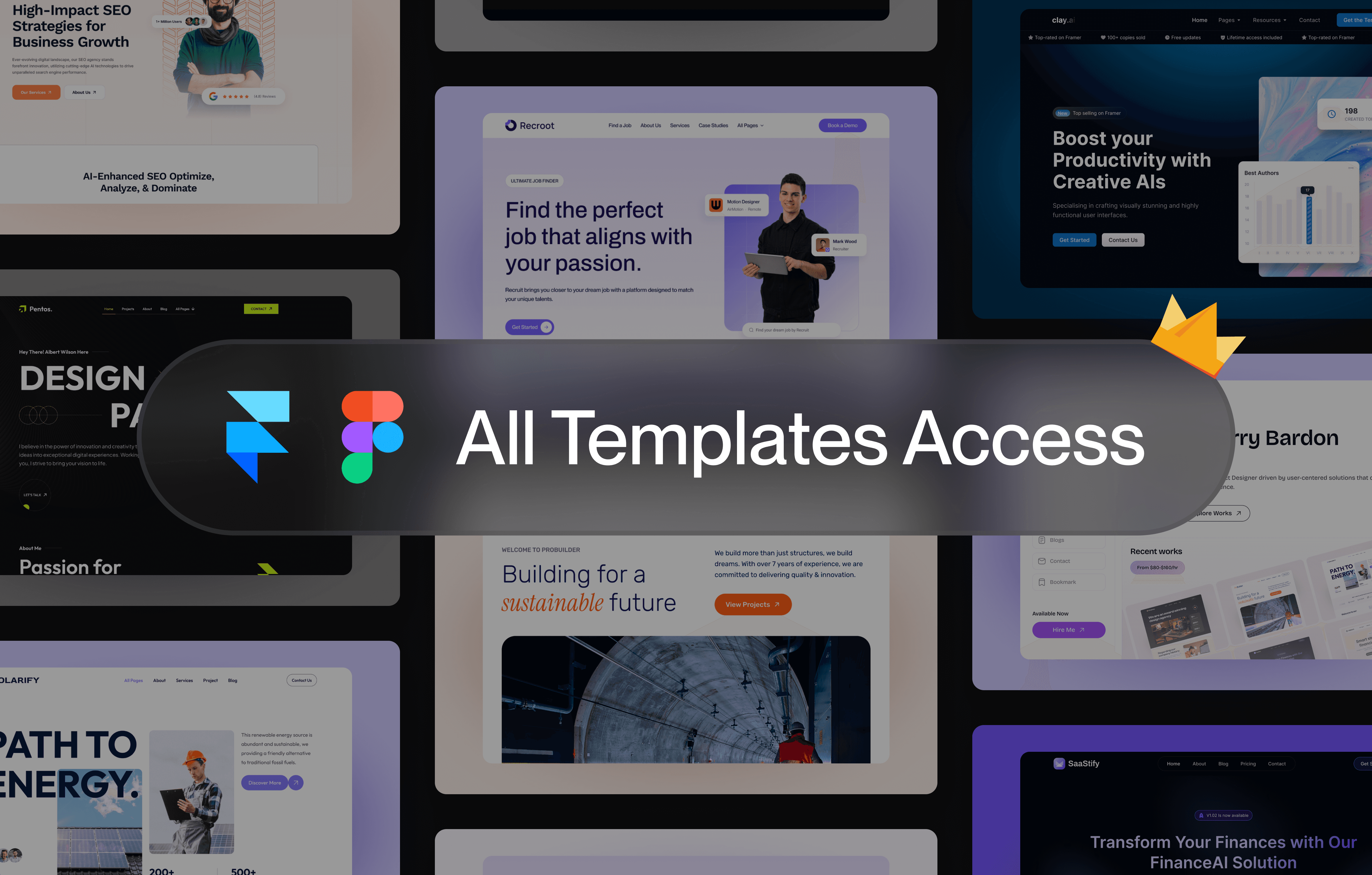

Access 65+ Framer Templates

Access 35+ webflow Templates

Access 70+ Figma Templates

3100+
trusted us
Access 65+ Framer Templates
Access 35+ webflow Templates
Access 70+ Figma Templates
3100+
trusted us
Get Started Now
Join the many businesses and professionals who have elevated their online presence with our Framer & Webflow Premium Templates—powerful, customizable, and easy to use.
3100+
professionals trusted us
Get Started Now
Join the many businesses and professionals who have elevated their online presence with our Framer Premium Templates—powerful, customizable, and easy to use.
3100+
professionals trusted us