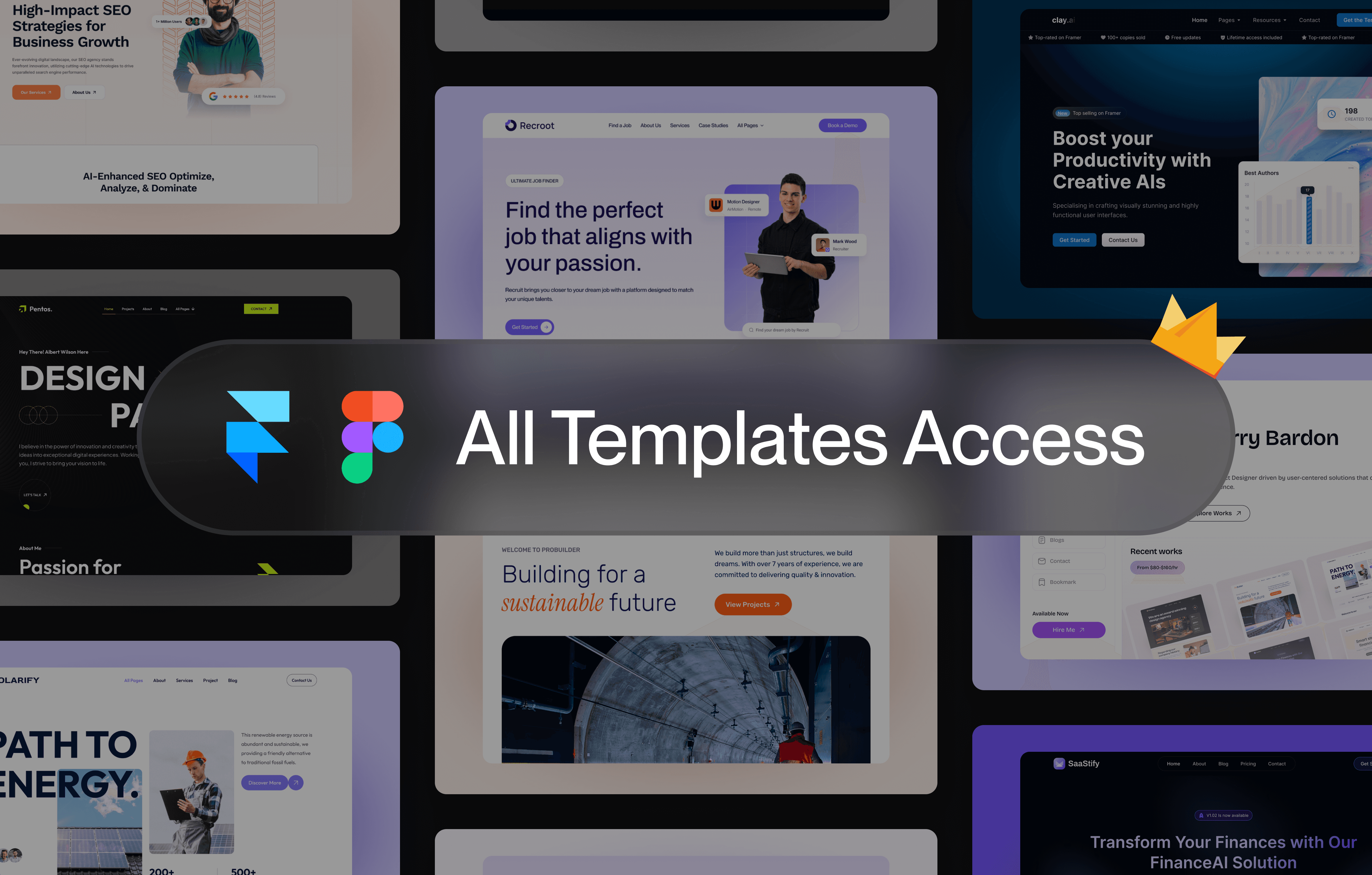
Framer AI Templates Guide
Not sure which framer ai template is right for your project? This guide breaks down what matters most so you can choose faster and avoid expensive design mismatches.
🚀 Introduction (Problem + Promise)
AI products are powerful—but explaining them clearly is one of the hardest challenges founders face.
You might have:
A cutting-edge AI tool
Advanced automation
Strong backend technology
But if users don’t understand your product within seconds, they won’t convert.
That’s the real problem.
AI websites are not just about design—they are about:
👉 clarity
👉 trust
👉 simplicity
This is where the right template becomes critical.
This framer ai website templates guide will help you:
Simplify complex AI products
Structure high-converting AI websites
Choose the right template
Avoid common design mistakes
Whether you're building an AI SaaS product, automation tool, or machine learning platform, this guide will help you present your product in a way that users actually understand—and act on.
🧠 Why Framer Is Ideal for AI Websites
AI websites require a different approach compared to traditional websites—and Framer fits perfectly.
1. Built for Product Explanation
AI products are complex.
Framer helps you:
Break down features
Use visual storytelling
Structure content clearly
👉 Making your product easier to understand.
2. Smooth Animations for AI Workflows
AI tools often need:
Process explanation
Workflow visualization
Feature demonstration
Framer allows:
Interactive animations
Step-by-step visual flows
👉 Which improves engagement.
3. Modern UI for Tech Products
AI startups need:
Clean design
Futuristic feel
Professional look
Framer templates deliver:
👉 modern, high-end UI out of the box
4. CMS for Content & Education
AI companies benefit from:
Blogs
Use-case pages
Documentation
Framer CMS helps you:
Publish content
Improve SEO
Build authority
5. Fast Iteration
AI products evolve quickly.
Framer allows you to:
👉 update messaging fast without rebuilding your site
🧩 Essential Pages for AI Websites
A strong AI website isn’t just one page—it’s a system.
1. Homepage
Your homepage must:
Explain your product clearly
Show value instantly
Guide users to action
2. Features Page
Break down:
What your AI does
How it works
Why it matters
3. Use Case Pages
AI products often serve multiple audiences.
Examples:
For marketers
For developers
For businesses
4. Pricing Page
Keep it:
Simple
Transparent
Easy to understand
5. Blog / Resources
Important for:
SEO
Education
Authority
👉 Explore templates here:
/framer/ai-templates
🎯 What Makes a High-Converting AI Template
1. Clear Product Explanation
Your template must simplify:
👉 complex concepts
Use:
Short text
Visual aids
Structured sections
2. Strong Visual Hierarchy
Guide users step-by-step.
Avoid:
Information overload
Clutter
3. Product Demonstration
Show:
Screenshots
UI
Workflow
4. Trust Signals
AI products need trust.
Include:
Testimonials
Use cases
Integrations
5. Clear CTA
Guide users to:
Try product
Book demo
Join waitlist
6. Modern Design
Your design should reflect:
👉 innovation and quality
🏆 Recommended Framer AI Templates
ClayAI
Overview
Purpose-built for AI products.
Best use case
AI SaaS, automation tools.
Key features
Product explanation sections
Modern UI
Feature breakdown
Why it works
Simplifies complex AI workflows.
Metony
Overview
Flexible and scalable template.
Best use case
Growing AI startups.
Key features
CMS support
Modular layout
Multi-page system
Why it works
Adapts as product evolves.
Synco
Overview
Bold, futuristic design.
Best use case
Brand-driven AI startups.
Key features
Animations
Visual storytelling
Dynamic layout
Why it works
Creates strong first impression.
SaaSify
Overview
Conversion-focused template.
Best use case
AI SaaS products.
Key features
Pricing tables
CTA-focused layout
Clean structure
Why it works
Optimized for user conversion.
Vinency
Overview
Story-driven template.
Best use case
Founder-led AI startups.
Key features
Narrative sections
Blog integration
Clean UX
Why it works
Builds trust through storytelling.
👉 Browse more:
/framer/ai-templates
🧠 How to Choose the Right AI Template
1. Product Complexity
If your product is complex:
👉 choose templates with strong explanation sections
2. Target Audience
Are you targeting:
Developers
Businesses
Consumers
Adjust structure accordingly.
3. Content Needs
Do you need:
Blog
Documentation
Resources
4. Conversion Goal
Define your goal:
Signup
Demo
Trial
5. Scalability
Choose templates that grow with your product.
📈 Best Practices for AI Websites
1. Simplify Everything
Avoid technical jargon.
2. Focus on Benefits
Users care about outcomes—not technology.
3. Use Visual Explanations
Show, don’t just tell.
4. Build Trust Early
Include:
Testimonials
Logos
Proof
5. Optimize for Conversion
Every page should guide users.
❓ FAQs
Can I build AI websites with Framer?
Yes. Framer is ideal for AI SaaS and tech products.
Are AI templates customizable?
Yes, fully customizable.
Do I need coding skills?
No, Framer is no-code friendly.
Can I scale content?
Yes, with CMS integration.
Are these templates SEO-friendly?
Yes, optimized for performance and structure.
AI products are powerful—but only if users understand them.
The right template helps you:
Simplify complexity
Build trust
Convert visitors
This framer ai website templates guide gives you a clear path to:
Choose the right template
Structure your website effectively
Avoid common mistakes
Templates like ClayAI, Metony, Synco, SaaSify, and Vinency provide everything you need to build a high-performing AI website.
👉 Explore Framer AI templates and build a website that turns complex ideas into clear, compelling experiences.