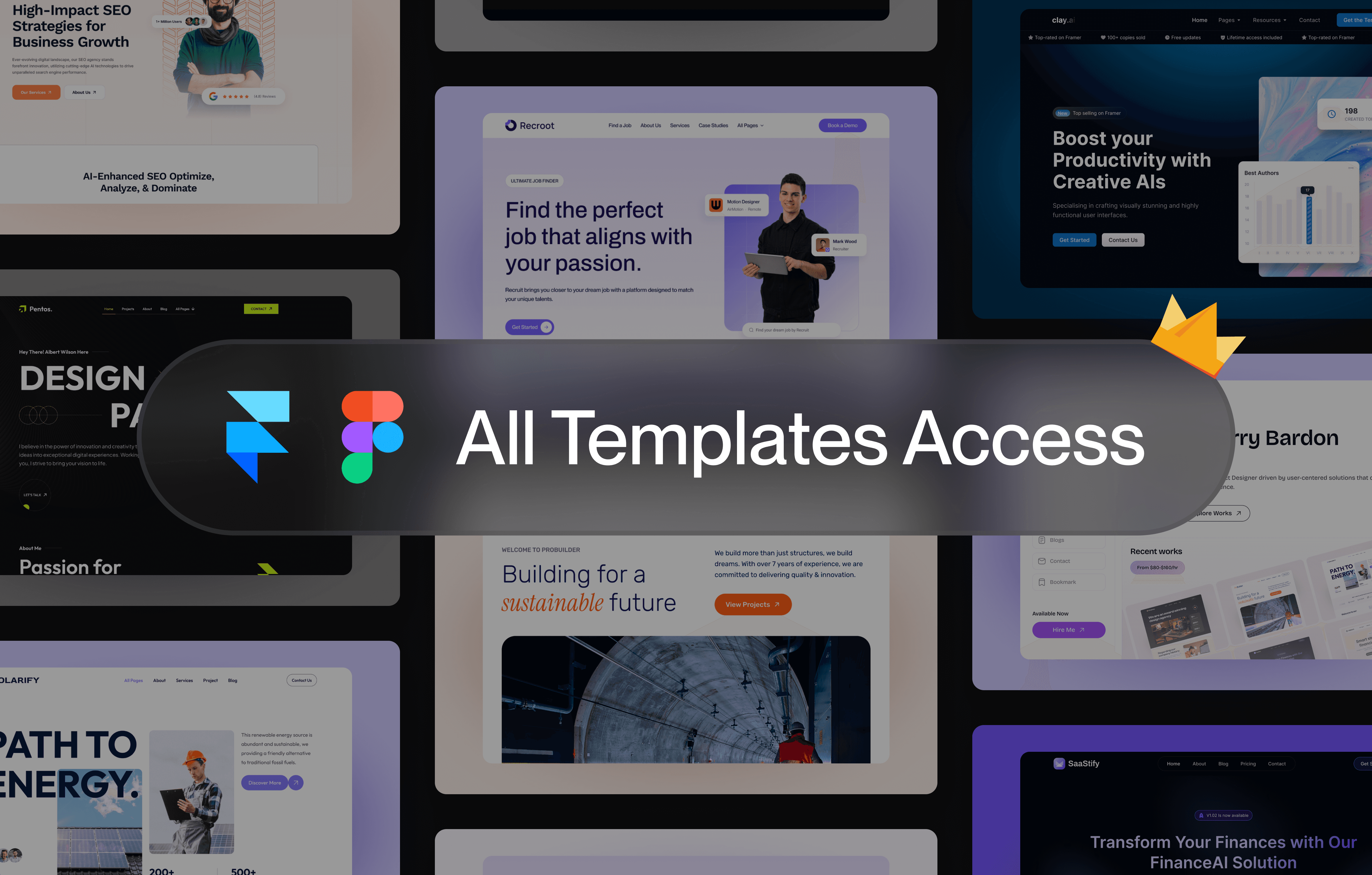
Framer Real Estate Templates Guide
Not sure which framer real estate template is right for your project? This guide breaks down what matters most so you can choose faster and avoid expensive design mismatches.
Real estate is a visual, trust-driven industry—and your website plays a critical role in both.
Whether you're a real estate agent, property developer, or agency, your website needs to do more than just “exist.” It needs to:
showcase listings clearly
build credibility instantly
generate qualified leads
The problem? Most real estate websites are either outdated, hard to navigate, or fail to convert visitors into inquiries.
That’s where templates come in.
This framer real estate website templates guide will help you understand how to:
Build a modern real estate website
Structure property listings effectively
Choose the right template
Optimize for conversions
Instead of wasting time on design and development, you can start with a proven structure that’s already optimized for performance.
Why Framer Is Ideal for Real Estate Websites
Framer offers a powerful combination of design flexibility and ease of use—making it ideal for real estate professionals.
1. Visual-First Design
Real estate relies heavily on visuals.
Framer allows you to:
Showcase high-quality property images
Use full-width galleries
Highlight listings beautifully
👉 This improves user engagement and trust.
2. Fast Launch for Agents & Agencies
Time is critical in real estate.
With Framer:
You can launch quickly
Update listings easily
Avoid development delays
3. CMS for Property Listings
A strong real estate website needs dynamic content.
Framer CMS allows you to:
Add new properties
Update listings
Organize by categories
👉 Perfect for scaling portfolios.
4. Mobile Optimization
Most users browse listings on mobile.
Framer templates are:
Fully responsive
Optimized for small screens
Easy to navigate
5. Conversion-Focused Layouts
Modern templates include:
Inquiry forms
CTA buttons
Lead capture sections
👉 Helping you turn visitors into buyers.
Essential Pages for Real Estate Websites
A high-performing real estate website includes several key pages.
1. Homepage
Your homepage should:
Highlight featured listings
Explain your services
Build trust
2. Property Listings Page
This is your core page.
It should include:
Property images
Pricing
Key details
3. Property Detail Pages
Each listing should have its own page with:
Full gallery
Description
Features
Contact option
4. About Page
Build credibility by showing:
Your experience
Your team
Your success
5. Contact Page
Make it easy for users to:
Book viewings
Send inquiries
👉 Explore templates here:
/framer/real-estate-templates
What Makes a High-Converting Real Estate Template
1. High-Quality Visual Layout
Your template must prioritize:
👉 images
👉 spacing
👉 clarity
2. Easy Navigation
Users should quickly:
Browse listings
Filter properties
Find details
3. Strong Lead Capture
Include:
Inquiry forms
Call buttons
Contact CTAs
4. Trust Elements
Add:
Testimonials
Reviews
Credentials
5. Location-Based Sections
Highlight:
Neighborhoods
Locations
Property areas
6. Fast Performance
Slow sites lose buyers.
Recommended Framer Real Estate Templates
Metony
Overview
Flexible template adaptable for real estate.
Best use case
Agencies managing multiple listings.
Key features
CMS support
Modular layout
Multi-page system
Why it works
Scales easily as listings grow.
Findays
Overview
Modern and clean design.
Best use case
Property-focused websites.
Key features
Visual layout
Content blocks
Easy navigation
Why it works
Balances aesthetics and usability.
Vinency
Overview
Story-driven template.
Best use case
Personal real estate brands.
Key features
Blog support
Clean design
Content flow
Why it works
Builds trust through storytelling.
Gilberto
Overview
Minimal and professional.
Best use case
Independent agents.
Key features
Simple layout
Portfolio-style listings
Responsive design
Why it works
Clear and easy to use.
Synco
Overview
Modern, visually strong template.
Best use case
Premium property showcases.
Key features
Animations
Dynamic layouts
Strong visuals
Why it works
Creates high-end feel.
👉 Browse more:
/framer/real-estate-templates
How to Choose the Right Real Estate Template
1. Type of Business
Are you:
Agent
Agency
Developer
Choose accordingly.
2. Number of Listings
More listings → need CMS
3. Focus on Sales vs Branding
Some sites focus on:
Listings
Others:Personal brand
4. Customization Needs
Ensure flexibility.
5. Scalability
Choose templates that grow with your portfolio.
Best Practices for Real Estate Websites
1. Use High-Quality Images
Low-quality visuals reduce trust.
2. Keep Listings Updated
Outdated listings hurt credibility.
3. Write Clear Descriptions
Help users understand properties quickly.
4. Add Strong CTAs
Guide users toward inquiry.
5. Optimize for Mobile
Most users browse on phones.
FAQs
Do Framer templates support property listings?
Yes, especially with CMS integration.
Can I add new properties easily?
Yes, CMS allows dynamic updates.
Are these templates mobile-friendly?
Yes, fully responsive.
Can I customize design?
Yes, fully customizable.
Are they SEO-friendly?
Yes, optimized for performance and structure.
A strong real estate website isn’t just about listings—it’s about presentation, trust, and conversion.
With the right template, you can:
Showcase properties effectively
Build credibility
Generate more leads
This framer real estate website templates guide helps you:
Choose the right structure
Avoid common mistakes
Build a modern, high-performing website
Templates like Metony, Findays, Vinency, Gilberto, and Synco provide everything you need to get started.
👉 Explore Framer real estate templates and build a website that turns visitors into buyers.