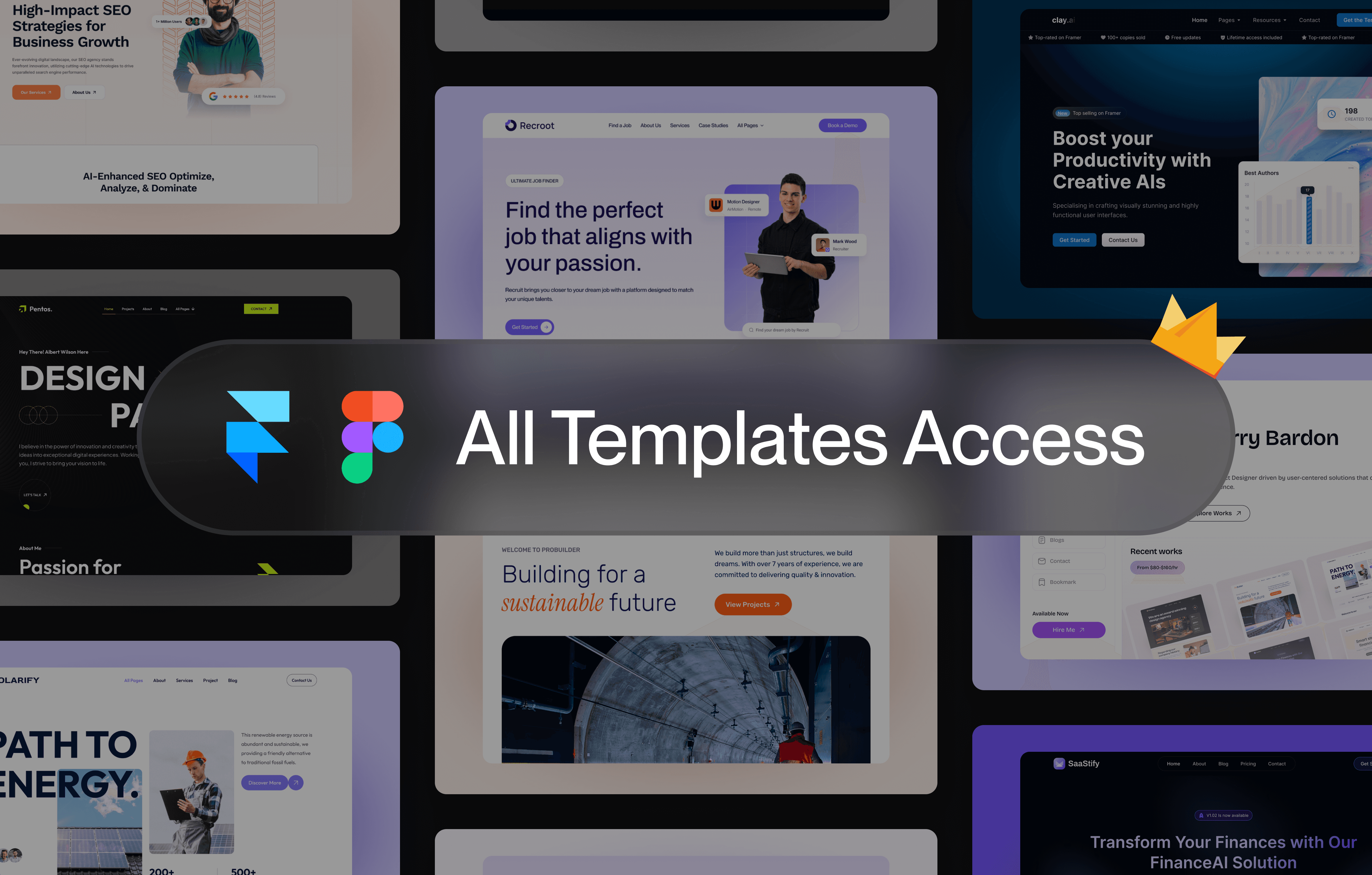
Framer SaaS Templates Guide
Not sure which framer saas template is right for your project? This guide breaks down what matters most so you can choose faster and avoid expensive design mismatches.
🚀 Introduction (Problem + Promise)
Building a SaaS website isn’t just about design—it’s about clarity, conversion, and growth.
Most SaaS founders struggle with one core problem:
👉 How do you explain a complex product in a simple, high-converting way?
You might have a great product, strong features, and a clear vision—but if your website fails to communicate value within seconds, users leave.
That’s why choosing the right template matters.
This framer saas website templates guide is designed for:
SaaS founders
AI startups
B2B tools
Product teams launching MVPs
Instead of guessing what works, you’ll learn:
What makes SaaS websites convert
Why Framer is ideal for SaaS
What pages you actually need
How to choose the right template
How to customize it for growth
👉 If your goal is to launch faster, convert better, and scale efficiently—this guide will help you do exactly that.
🧠 Why Framer Is Ideal for SaaS Websites
Framer has quickly become one of the most powerful platforms for building modern SaaS websites—and for good reason.
1. Speed to Launch
Traditional development takes:
Weeks (or months)
Developers + designers
Multiple iterations
With Framer:
👉 You can launch in days
Pre-built SaaS structures allow you to:
Skip wireframing
Skip layout building
Focus on messaging
2. Built-in Animations
SaaS websites rely heavily on:
Product demos
Feature transitions
Interaction feedback
Framer makes this easy with:
Native animations
Smooth transitions
No-code interactions
👉 This improves engagement and perceived product quality.
3. CMS Flexibility
Modern SaaS websites need content systems:
Blogs
Resources
Case studies
Documentation
Framer’s CMS allows you to:
Scale content easily
Improve SEO
Build authority over time
4. Cost Efficiency
Compared to custom development:
No expensive dev cycles
No long maintenance costs
No rebuilds for small changes
👉 Perfect for early-stage startups.
5. SEO Readiness
Framer supports:
Clean HTML
Fast loading speed
Structured content
Schema integration
👉 Which makes it ideal for organic growth.
🧩 Types of SaaS Website Templates (Buyer Education)
Not all SaaS templates are the same.
Choosing the right type depends on your product and stage.
AI SaaS Templates
Best for:
AI tools
Automation platforms
Machine learning products
Key features:
Visual explanations
Use-case sections
Product clarity
B2B SaaS Templates
Best for:
Enterprise tools
Business software
Workflow systems
Key features:
Trust signals
Case studies
ROI-focused messaging
Startup Landing Templates
Best for:
MVP launches
Early-stage startups
Key features:
Simple structure
Strong CTA
Fast deployment
Product Marketing Templates
Best for:
Scaling SaaS products
Key features:
Feature breakdown
Integration sections
Pricing tables
SaaS Templates with Blog CMS
Best for:
SEO growth
Content marketing
Key features:
Blog system
Category structure
Content scalability
👉 Explore all categories here:
/framer/saas-templates
👉 Each template supports:
CMS
Conversion layouts
SaaS structure
🎯 What Makes a High-Converting SaaS Template
A good design looks nice.
A great SaaS template converts.
Here’s what actually matters:
1. Hero Clarity
Your hero section must answer:
👉 What does your product do?
👉 Who is it for?
👉 Why should I care?
Within 3–5 seconds.
2. Feature Breakdown Blocks
Users need clarity, not complexity.
Use:
Icons
Short descriptions
Visual support
3. Pricing Tables
Pricing is a decision point.
Your template must include:
Clear tiers
Feature comparison
Strong CTA
4. Testimonials & Social Proof
Trust drives conversions.
Include:
Client logos
Reviews
Case studies
5. Case Study Sections
Show:
Problem
Solution
Results
👉 This builds credibility fast.
6. FAQ Sections
Remove objections before they happen.
👉 See more here:
/high-converting-framer-templates
📈 SEO Benefits of Framer for SaaS
SEO is not optional—it’s your long-term growth channel.
1. Clean HTML Output
Search engines prefer:
Structured content
Semantic markup
Framer delivers both.
2. Page Speed
Fast websites = better rankings + better UX.
3. CMS Blogging
You can:
Publish articles
Build clusters
Rank for long-tail keywords
4. Schema Compatibility
You can implement:
FAQ schema
Product schema
Article schema
👉 This improves visibility in:
Google
AI search (ChatGPT, Perplexity)
👉 Learn more:
/seo-optimized-framer-templates
⚖️ Framer vs Webflow for SaaS
Both platforms are strong—but serve slightly different needs.
Framer
Best for:
Speed
Simplicity
SaaS marketing sites
Webflow
Best for:
Complex systems
Advanced interactions
👉 Compare here:
/comparison/framer-vs-webflow
🧠 How to Choose the Right SaaS Template (Checklist)
1. Your Stage
MVP → simple template
Growth → scalable CMS
2. Blog Requirement
Do you need SEO?
👉 If yes → choose CMS-enabled template
3. Pricing Complexity
Simple vs tiered vs enterprise
4. Integrations
APIs, tools, external platforms
5. Design Flexibility
Can you customize easily?
👉 Browse templates:
/framer/saas-templates
❓ FAQs
Are Framer SaaS templates SEO-friendly?
Yes. They support clean structure, CMS, and fast loading.
Can I integrate Stripe?
Yes, via external tools and integrations.
How fast can I launch?
In most cases, within days.
Do templates include CMS?
Many modern templates include CMS for blogs and content.
Can I customize the design?
Yes. Framer allows full customization.
Choosing the right template is not just a design decision—it’s a growth decision.
A well-structured SaaS website:
Improves clarity
Builds trust
Drives conversions
With the right framer saas website templates guide, you now understand:
What to look for
What to avoid
How to scale
👉 Browse Framer SaaS Templates👉 Compare Framer vs Webflow👉 Explore pricing and features