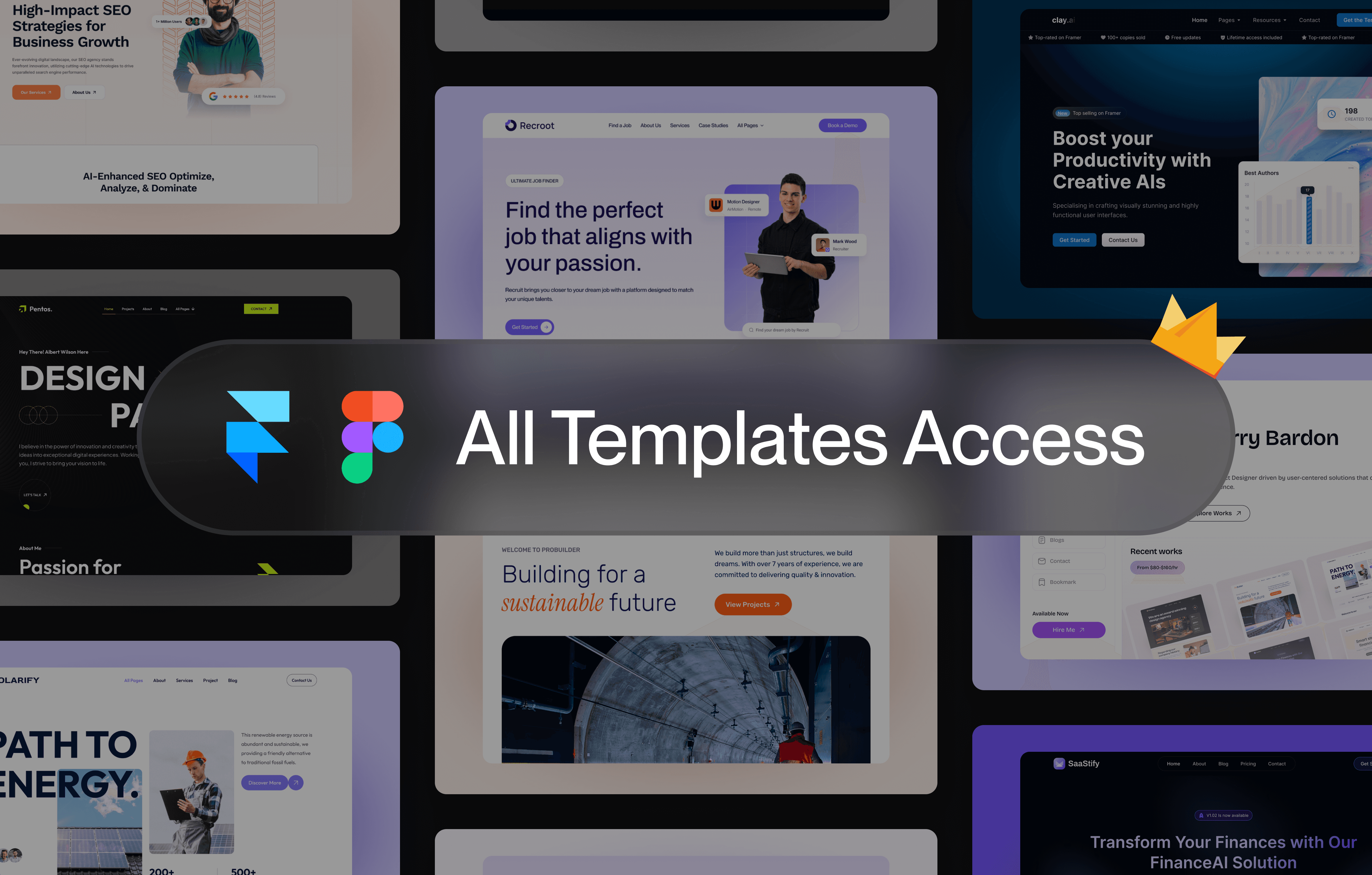
Framer Startup Templates Guide
Not sure which framer startup template is right for your project? This guide breaks down what matters most so you can choose faster and avoid expensive design mismatches.
🚀 Introduction (Problem + Promise)
Launching a startup is already hard—your website shouldn’t make it harder.
Most founders face the same challenge:
👉 how to go from idea → live website → first users
You might have:
A great product idea
Early traction
A clear vision
But without a proper website, everything slows down.
You either:
Spend weeks designing from scratch
Hire expensive developers
Or launch something that doesn’t convert
This is where the right template changes everything.
This framer startup website templates guide is designed to help you:
Launch faster without compromising quality
Build a clear, high-converting website
Structure your messaging correctly
Choose the right template for your stage
Whether you're building an MVP, launching a SaaS product, or validating a new idea—this guide will show you how to move quickly and effectively.
🧠 Why Framer Is Ideal for Startup Websites
Startups need speed, flexibility, and clarity—and Framer delivers all three.
1. Fast Time-to-Market
In startups, speed is everything.
With Framer:
No heavy development
No long design cycles
No complex setup
👉 You can go live in days, not weeks.
2. Built for Landing Pages
Most startups rely on:
Landing pages
Waitlists
Product showcases
Framer templates are optimized for:
Clear messaging
Strong CTAs
Conversion-focused layouts
3. Easy Iteration
Startups evolve quickly.
You need to:
Change messaging
Update features
Adjust pricing
Framer allows:
👉 fast updates without rebuilding your site
4. Visual Product Presentation
Users need to understand your product fast.
Framer supports:
Animations
Product visuals
Feature walkthroughs
5. SEO & Growth Ready
Even early-stage startups should think about SEO.
Framer supports:
Clean structure
Fast loading
CMS for content
👉 Helping you build long-term growth.
🧩 Essential Pages for Startup Websites
A startup website doesn’t need to be complex—but it must be strategic.
1. Landing Page (Core)
This is your most important page.
It should include:
Clear headline
Value proposition
Product explanation
CTA
2. Features Page
Break down your product into:
Key benefits
Use cases
Visual explanations
3. Pricing Page (If applicable)
Even early-stage startups benefit from:
Transparent pricing
Simple plans
Clear value
4. About Page
Tell your story:
Why you built the product
Who you are
What you believe
5. Blog / Content (Optional)
Useful for:
SEO
Authority
User education
👉 Explore startup templates:
/framer/startup-templates
🎯 What Makes a High-Converting Startup Template
Not all templates are built for startups.
Here’s what separates good from great:
1. Clear Value Proposition
Visitors should instantly understand:
👉 What your product does
👉 Who it’s for
2. Simple, Focused Design
Avoid:
Clutter
Over-design
Complexity
Startups need clarity.
3. Strong Call-to-Action
Your goal is usually:
Signup
Join waitlist
Book demo
Make it obvious.
4. Product Visualization
Show your product:
Screenshots
UI previews
Animations
5. Trust Elements
Even early-stage startups need:
Testimonials
Early users
Social proof
6. Mobile Optimization
Most users will visit on mobile.
🏆 Recommended Framer Startup Templates
Here are some strong templates for startups:
Metony
Overview
Flexible and scalable startup template.
Best use case
Startups planning to grow and expand.
Key features
CMS support
Modular layout
Multi-page system
Why it works
Perfect for evolving products.
SaaSify
Overview
Conversion-focused template.
Best use case
Early-stage SaaS startups.
Key features
Landing page optimized
Pricing sections
CTA-focused design
Why it works
Designed to convert users quickly.
Synco
Overview
Modern and visually strong template.
Best use case
Brand-driven startups.
Key features
Animations
Bold layouts
Visual storytelling
Why it works
Helps differentiate your product.
ClayAI
Overview
Built for AI startups.
Best use case
AI tools and automation platforms.
Key features
Product explanation sections
Clean UI
Feature highlights
Why it works
Simplifies complex products.
Vinency
Overview
Story-driven startup template.
Best use case
Founder-led startups.
Key features
Narrative sections
Blog support
Clean layout
Why it works
Builds trust through storytelling.
👉 Browse more:
/framer/startup-templates
🧠 How to Choose the Right Startup Template
1. Your Stage
Idea stage → simple landing page
Growth stage → scalable CMS
2. Type of Product
Different products need different structures:
SaaS
AI
Marketplace
3. Speed vs Customization
Do you need:
Fast launch?
Or full customization?
4. Content Needs
Will you:
Publish blogs?
Add case studies?
5. Future Scaling
Choose templates that:
👉 grow with your product
📈 Best Practices for Startup Websites
1. Focus on One Message
Avoid trying to explain everything.
👉 Focus on your core value.
2. Use Clear Language
Avoid jargon.
3. Show Product Early
Don’t hide your product.
4. Optimize for Conversion
Every page should lead to:
👉 one clear action
5. Test & Iterate
Your first version won’t be perfect.
❓ FAQs
Can I launch a startup website using Framer?
Yes. Framer is ideal for startups due to speed and flexibility.
Are startup templates customizable?
Yes. You can fully customize design and content.
Do I need coding skills?
No. Framer is no-code friendly.
Can I scale later?
Yes. Templates support scaling with CMS and new pages.
Are Framer templates SEO-friendly?
Yes. They support clean structure and performance.
Launching a startup website doesn’t have to be slow or complicated.
With the right template, you can:
Launch faster
Communicate clearly
Convert better
This framer startup website templates guide gives you a roadmap to:
Choose the right template
Avoid common mistakes
Build a high-performing startup website
Templates like Metony, SaaSify, Synco, ClayAI, and Vinency provide everything you need to get started.
👉 Explore Framer startup templates and launch your product with confidence.