Best Framer Startup Templates
Looking for the best Framer startup templates to launch your product fast? Whether you need Framer templates for startups at the MVP stage, a Framer startup landing page template that converts visitors into signups, or the best Framer SaaS templates for startups scaling toward product-market fit — this curated collection covers every startup type, from AI tools to fintech platforms, with professional design and no-code customization from $59.


What Makes a Great Framer Startup Template
Startup websites serve a fundamentally different purpose from traditional business sites. They are not just about branding — they are tools for validation, traction, and growth. Every section needs to earn its place by either explaining your product, building trust, or moving a visitor toward a specific action.
Three things separate a genuinely effective Framer startup template from one that just looks good in a preview.
Speed of launch without sacrificing credibility. An early-stage startup cannot afford to spend six weeks building a website. But it also cannot afford to look like it was built in an afternoon. The best startup templates are structured so that a focused customization pass — updating copy, swapping images, adjusting brand colors — gets you from purchase to a publish-ready site in a weekend. The design does the heavy lifting; you provide the content.
Conversion-first page architecture. Every section of a startup homepage should have a clear purpose tied to a conversion goal — email capture, trial signup, demo request, or waitlist join. Sections that exist purely for visual balance without a conversion function are sections that are costing you leads. Strong startup templates lead with the value proposition, support it with proof, and present the CTA at every natural decision point in the scroll.
Messaging flexibility for a product that is still evolving. Most startups change their positioning at least once in the first six months. The best Framer startup templates are structured so that updating your headline, rewriting a features section, or shifting your primary CTA does not require rebuilding the page from scratch. Framer's visual editor makes this fast — but the template structure has to support it.
Key Features to Look For in Framer Startup Templates
Not all startup templates are structured equally. These five criteria are what actually matter when evaluating options for an early-stage product website.
MVP-ready page structure. You should be able to publish a fully functional site within hours or days — not weeks. Look for templates with pre-built sections for product introduction, feature highlights, social proof, and a primary CTA. These eliminate the need for complex design decisions at the stage when you should be focused entirely on your product and your users.
Conversion-focused hero section. The hero is where most startup websites win or lose the visitor. Look for templates where the headline structure leads with outcome, not product description. A hero that opens with what your product does for the user converts better than one that opens with what your product is. Your template's hero structure determines how easy it is to write a headline that works from day one.
Pricing section with plan comparison. If you have a SaaS product or tiered offering, your pricing section is one of the most conversion-critical pages on the site. Look for templates with pre-built plan comparison layouts — monthly and annual toggle, feature checklist per tier, a highlighted recommended plan, and clear CTA buttons per plan.
Framer CMS support for content marketing. Content marketing is the most cost-effective long-term acquisition channel for most startups. Your template should include a blog section with proper Framer CMS collection structure — not a static placeholder page. This means blog posts get their own collection pages, category support, and a list view that updates automatically when you publish new content.
Scalability for a growing product. What works for an MVP may not be enough six months later. A strong startup template allows you to expand — adding new pages, feature sections, integration showcases, and case studies — without rebuilding the design from scratch. The best templates are a foundation, not a ceiling.
Best Framer Startup Templates
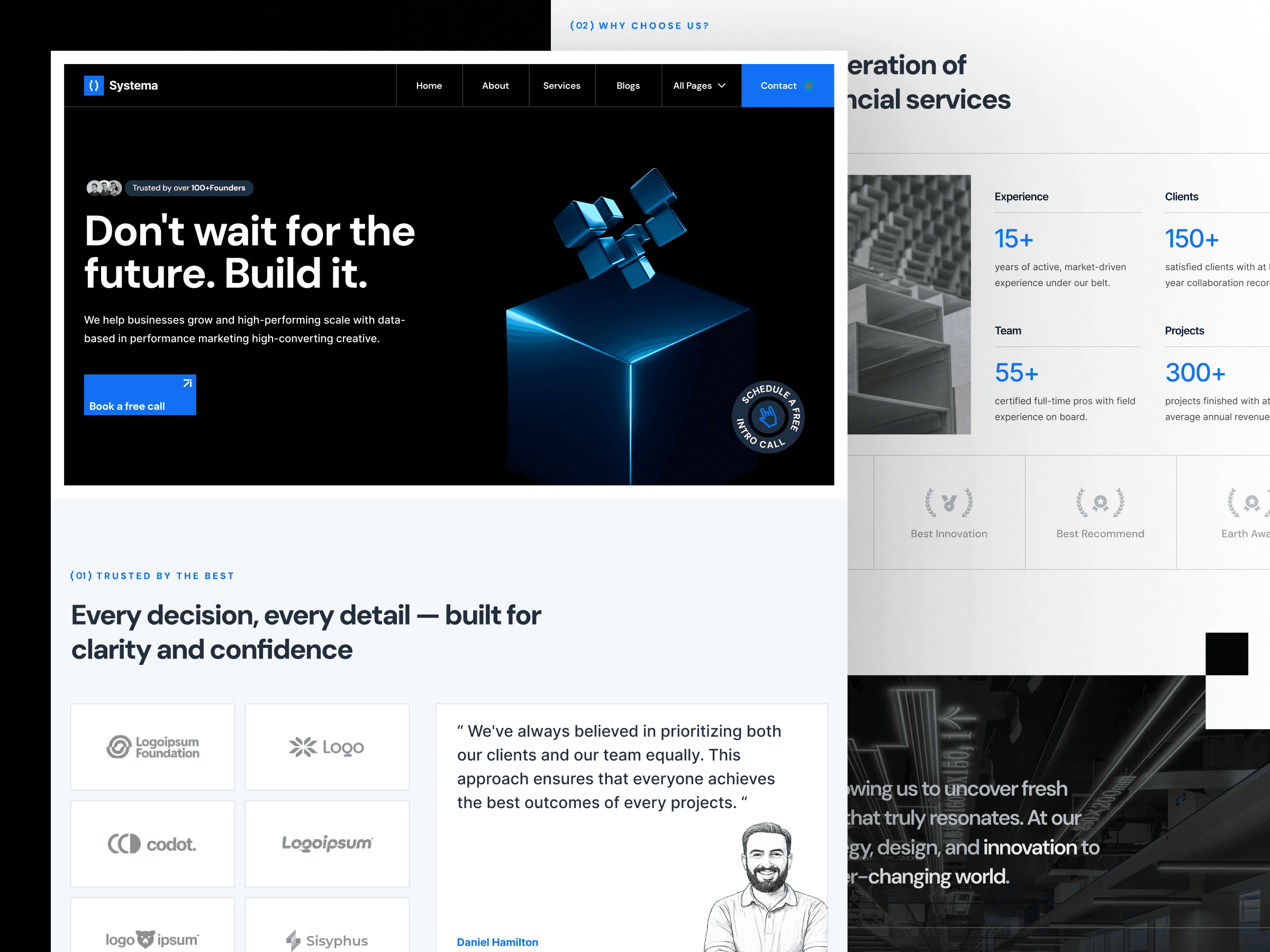
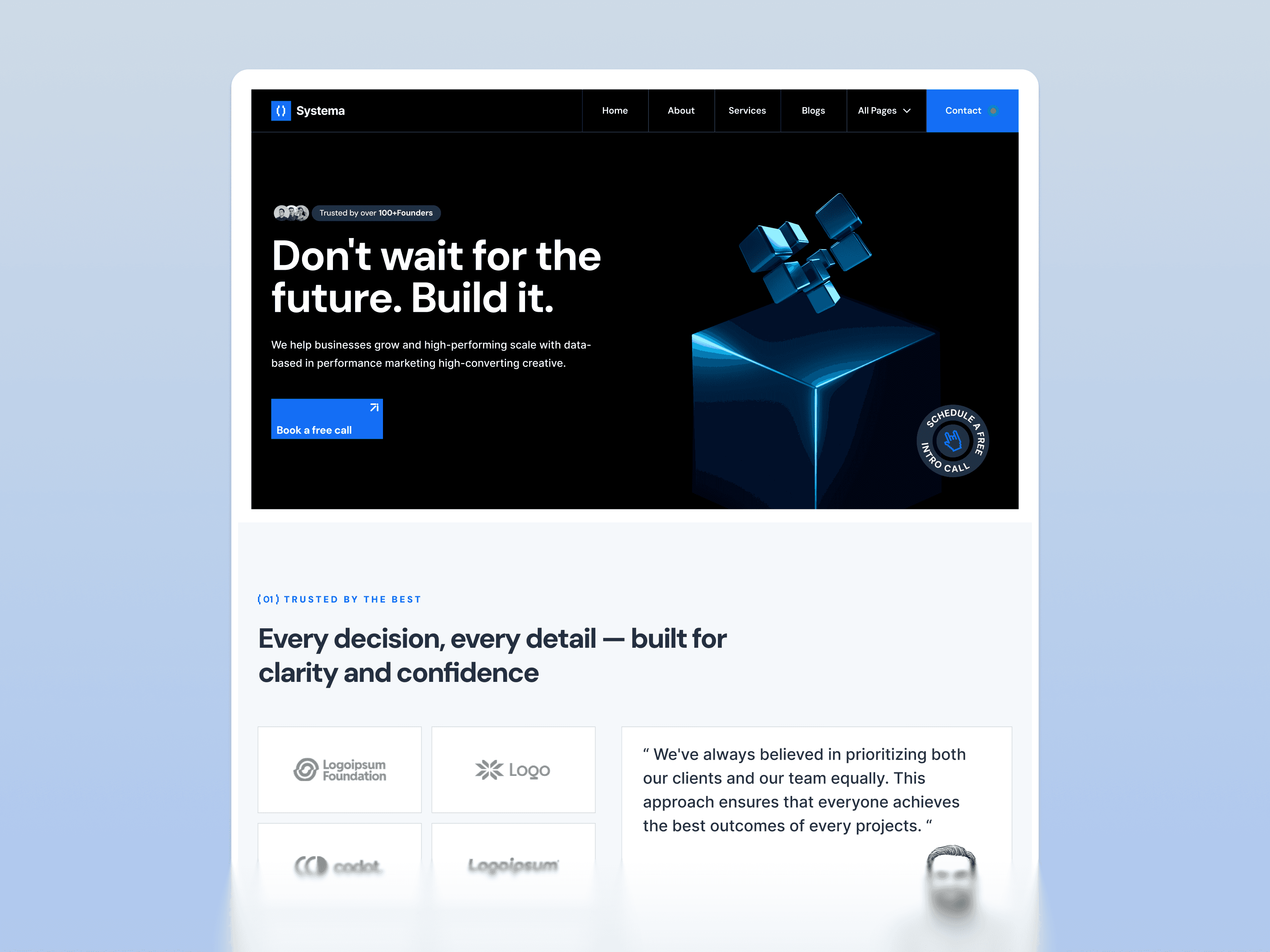
Systema is built for SaaS startups and business platforms that need to communicate a structured, professional product to a business buyer from day one. The design system is clean and authoritative — not flashy or experimental — which is exactly the right visual register for a SaaS product targeting mid-market or enterprise buyers who evaluate software on reliability and clarity before aesthetics.
The page architecture is built around the SaaS buyer journey: problem statement in the hero, capability proof in the features section, credibility signals in the social proof section, and a clear conversion path through pricing and CTA. Every section has a defined purpose tied to a specific stage of the buyer's decision-making process, which is what makes Systema one of the most conversion-engineered templates in the collection.
Best for: SaaS startups, business productivity platforms, B2B software products, project management tools, and any early-stage startup targeting business buyers who need to see structure and reliability before they sign up.
What's included:
Clean, authoritative SaaS design system built for business buyers
Problem-led hero section with dual CTA structure
Features section with structured visual capability breakdown
Social proof and client logo section for credibility
Pricing table with plan comparison and recommended plan highlight
Framer CMS blog section for content marketing
Contact and demo request section
Why it stands out: Systema is the most business-appropriate template in the collection — and for B2B SaaS startups, that is a competitive advantage. Most startup templates default to bold, experimental design that impresses other designers but makes enterprise buyers nervous. Systema communicates that your product is built for serious use by serious teams, which is exactly the first impression a B2B SaaS startup needs to make on a cold visitor.
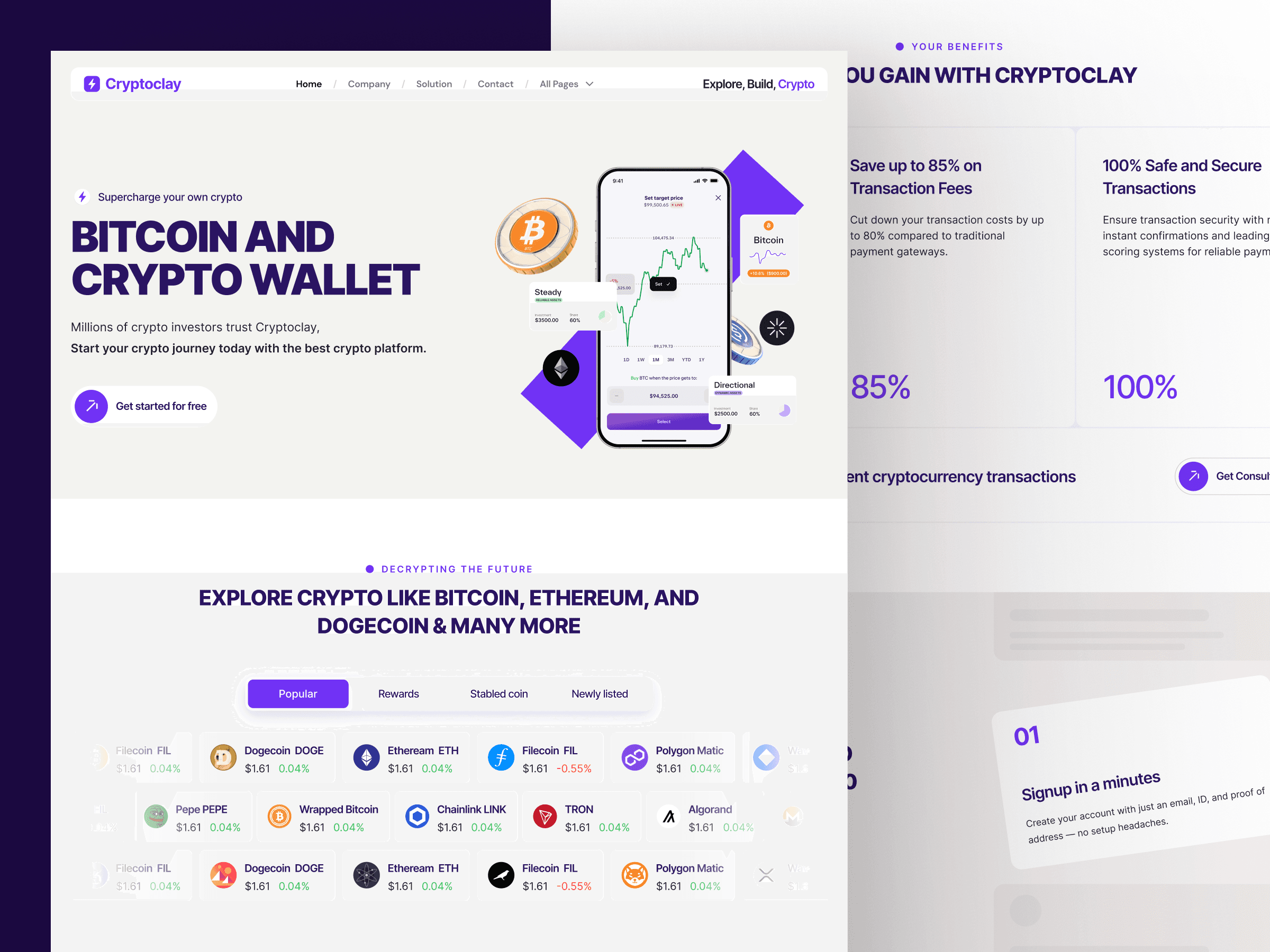
Cryptoclay is purpose-built for crypto startups, Web3 platforms, and blockchain-based products launching their first professional web presence. Building credibility in the crypto space requires a very specific combination of visual sophistication and trust signal architecture — generic SaaS templates fail here because they communicate neither the technical depth nor the financial credibility that crypto buyers evaluate before engaging with a new platform.
The dark design system with bold accent tones and high-impact typographic structure reflects the aesthetic expectations of the crypto-native market, where visual language is itself a signal of product legitimacy. The hero section combines innovation and security in a single visual moment — the hardest thing to achieve in Web3 product design — and the roadmap and token sections give buyers the forward-looking proof they need to trust an early-stage crypto product.
Best for: Crypto startup founders, Web3 platform builders, DeFi product teams, NFT and blockchain startups, and any early-stage team building at the intersection of decentralized technology and a product that needs to establish credibility fast.
What's included:
High-impact dark design system with Web3-native visual language
Innovation and security dual-signal hero section
Token, feature, and roadmap presentation sections
Trust and security signal placement throughout the page
Social proof and partner or integration showcase sections
Announcement and updates section
Framer CMS ready for product updates and community announcements
Why it stands out: Cryptoclay is the only template in this collection built specifically for the trust and visual language demands of the crypto and Web3 market. For a crypto startup, using a generic SaaS template communicates that you do not understand your own market. Cryptoclay communicates immediately that you do — in the design system, in the section structure, and in the credibility architecture that crypto buyers use to evaluate new platforms before they engage.
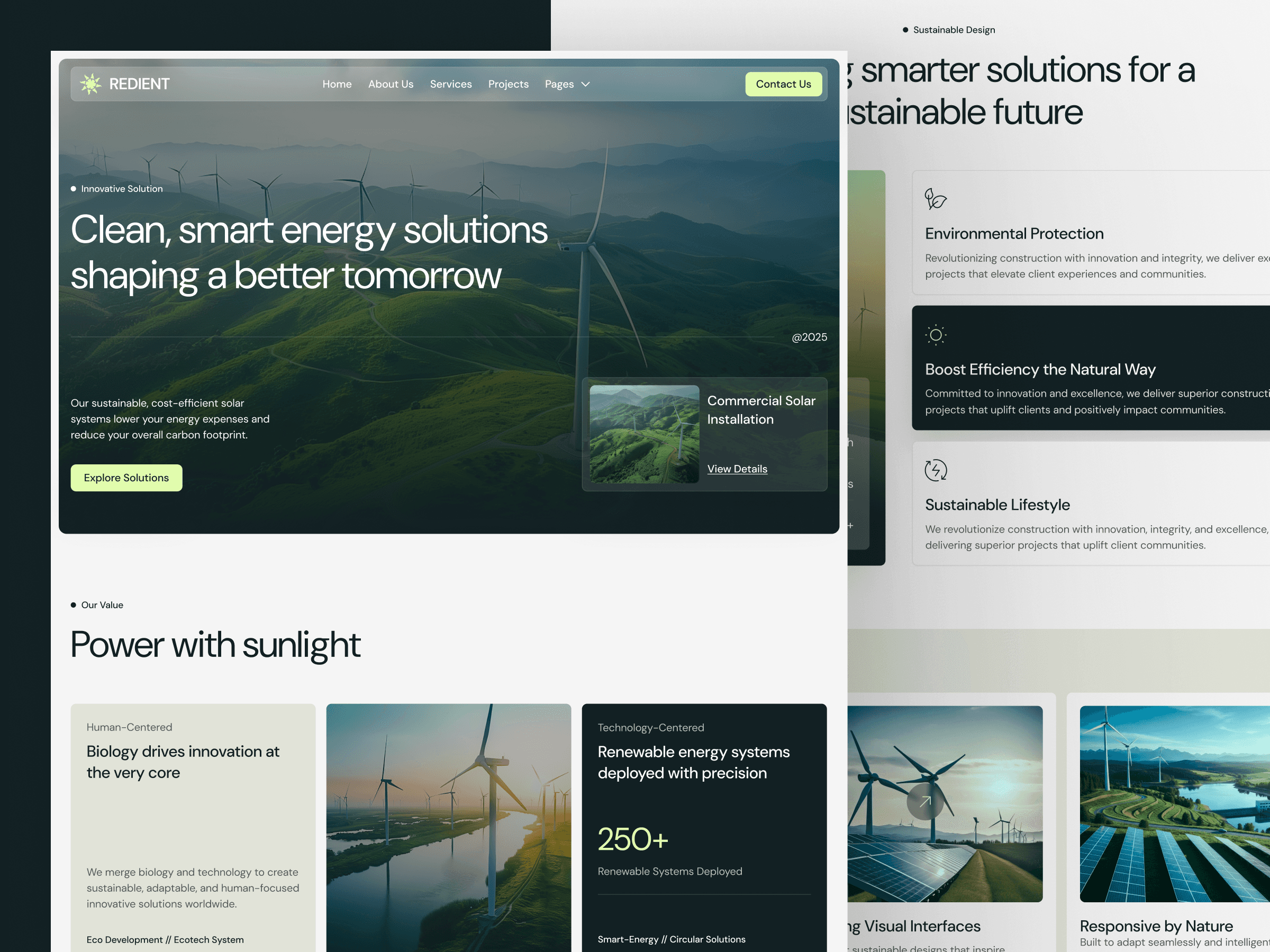
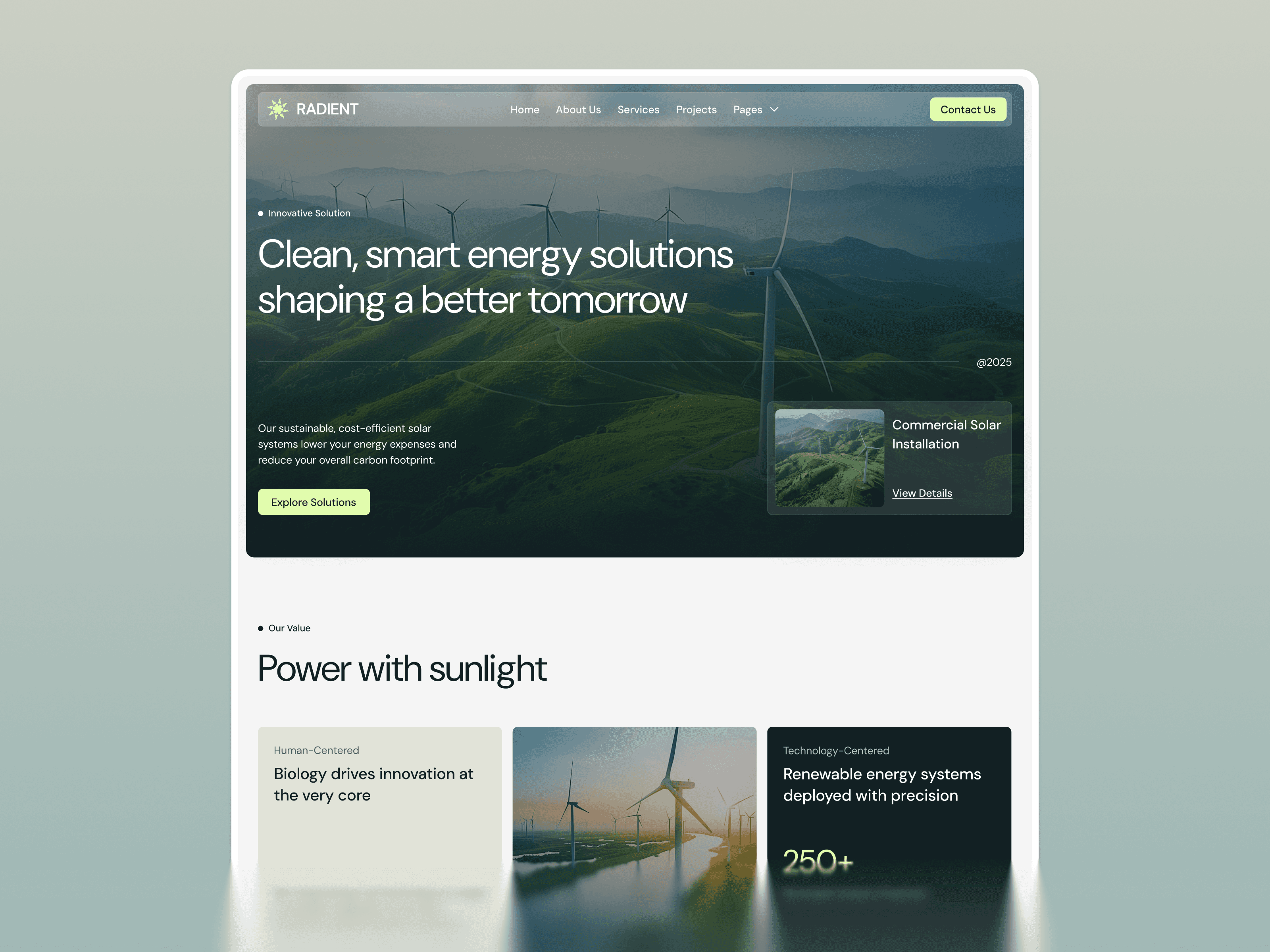
Redient is the most visually distinctive startup template in the collection — built for creative startups, design tools, brand platforms, and any early-stage product where the aesthetic quality of the website is itself part of the value proposition. If your startup is selling creativity, design quality, or visual intelligence, your website cannot look like every other SaaS product on the market. It needs to demonstrate your aesthetic before a visitor reads a single word of copy.
The design system is bold and editorial — strong typographic hierarchy, deliberate use of color and negative space, and a layout rhythm that communicates design thinking at every level. The hero section is built to carry a brand statement rather than a feature list, which is the right approach for a creative product where emotional resonance drives conversion more than rational feature comparison.
Best for: Creative tool startups, design platform founders, brand and identity software, visual creative products, marketing technology with a strong design identity, and any startup where the website's aesthetic quality is a direct signal of the product's value.
What's included:
Bold editorial design system with strong typographic hierarchy
Brand statement hero section built for creative product positioning
Portfolio or product showcase section with visual-first layout
Features section designed to present creative capabilities rather than technical specifications
Social proof and client or user showcase
Pricing section with clean plan comparison
Framer CMS blog and updates section
Why it stands out: Redient is the right choice when your startup's design identity is a competitive advantage rather than just a surface treatment. For creative tool founders, the quality of your website's design is the first proof point that your product delivers what it promises. Redient gives you a starting point that already demonstrates design sophistication — so your customization work is about expressing your specific brand, not establishing baseline quality from scratch.
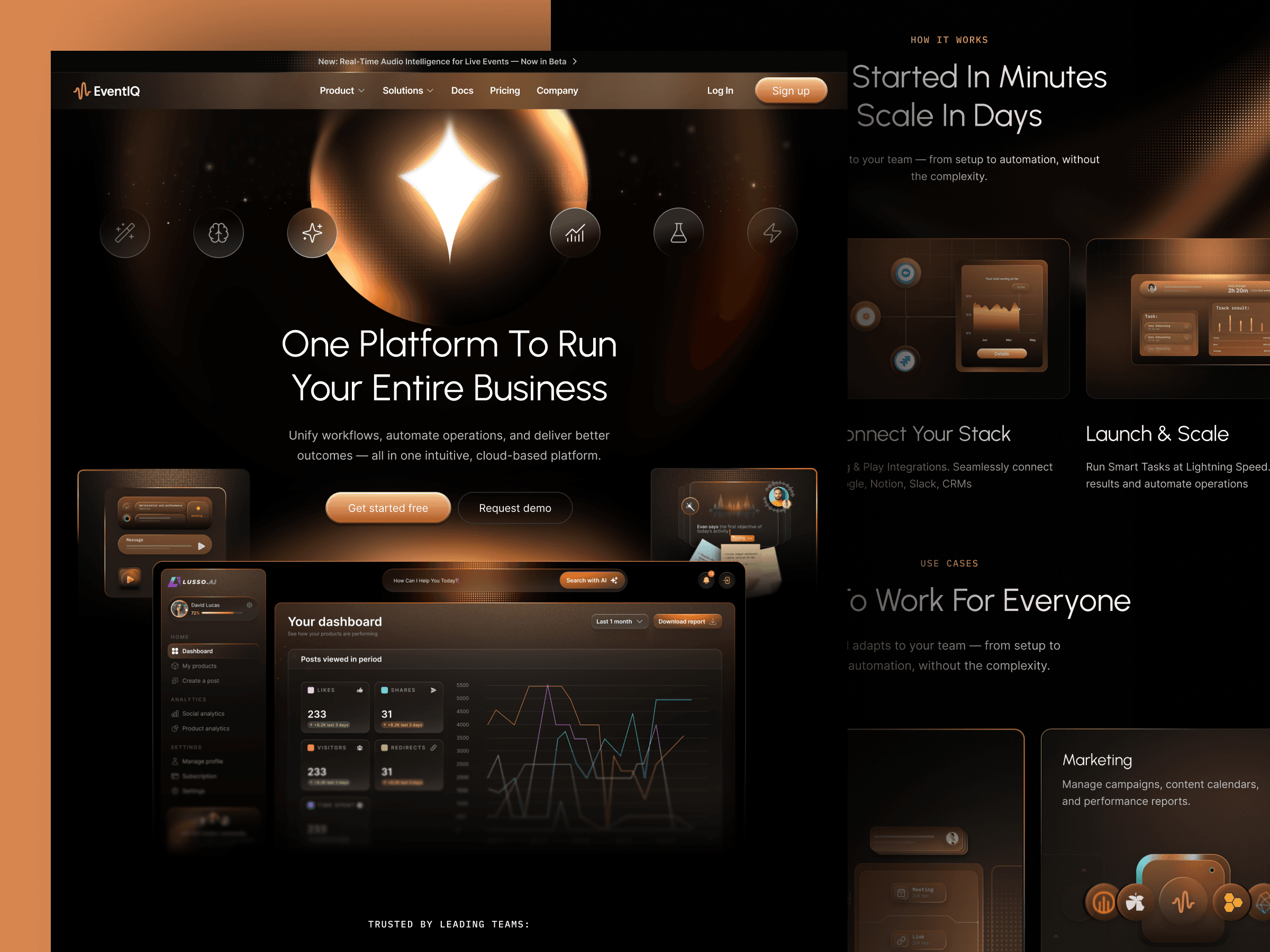
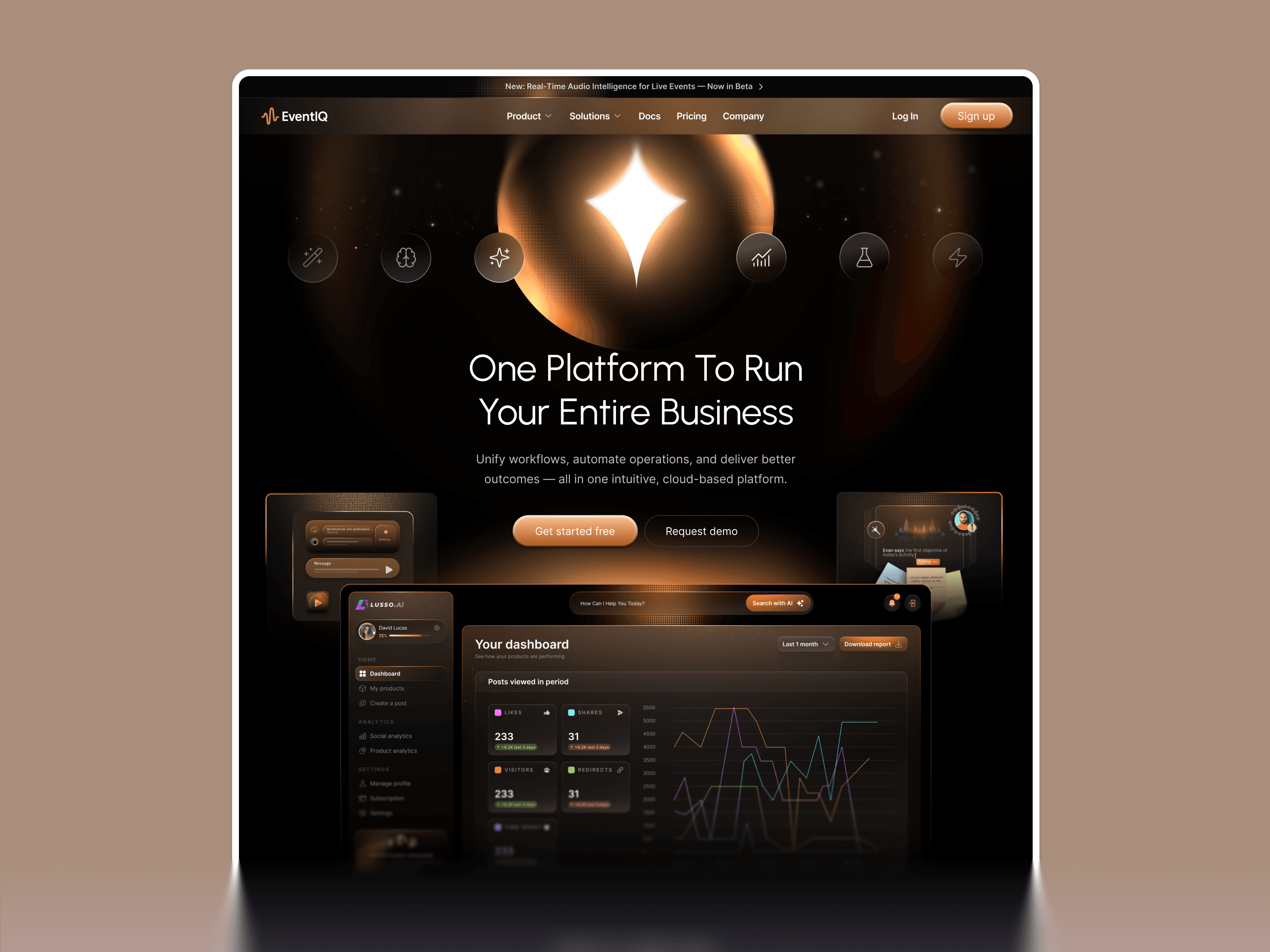
EventIQ is the most flexible startup template in the collection — a multipurpose SaaS and AI template that adapts cleanly across different product categories without requiring heavy structural changes. If your startup serves multiple audiences, has a product that is still evolving, or needs a template that can grow with significant changes to positioning and messaging, EventIQ provides the structural foundation to handle all of that without a rebuild.
The design system is versatile rather than opinionated — clean layouts, strong typographic hierarchy, and modular sections that can be rearranged to fit different startup types. The hero is built to carry outcome-led headlines across a wide range of SaaS and AI product categories, and the features section is structured to present multi-audience products without overwhelming visitors with complexity.
Best for: Multipurpose SaaS startups, AI-powered platforms serving multiple verticals, early-stage teams still refining product-market fit, startup studios building multiple products, and any founder who needs a structurally flexible template that will not constrain evolving messaging.
What's included:
Versatile SaaS and AI design system adaptable to multiple product categories
Outcome-led hero section with flexible headline structure
Multi-audience feature section with segmentation support
Integration and partner logo showcase
Pricing table with multi-plan structure
Blog-ready Framer CMS structure
Multiple layout variations for maximum customization flexibility
Why it stands out: Most startup templates are built for one specific type of product. EventIQ is built for breadth, which makes it the right choice when your startup does not fit neatly into a single category or when you are still testing which positioning angle converts best with your target audience. At $79 it is the most structurally versatile investment in the collection for founders who prioritize flexibility over a predetermined visual identity.
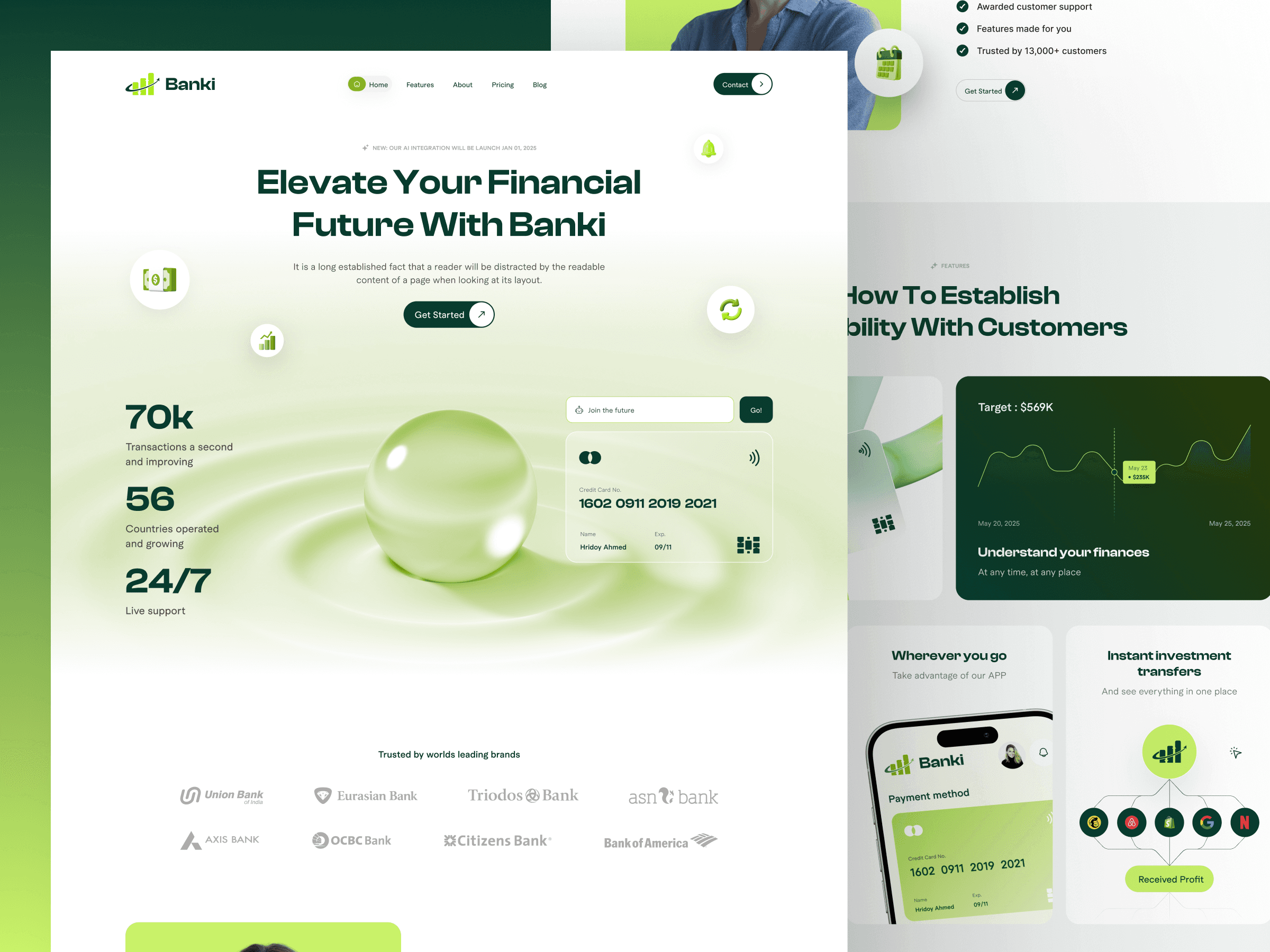
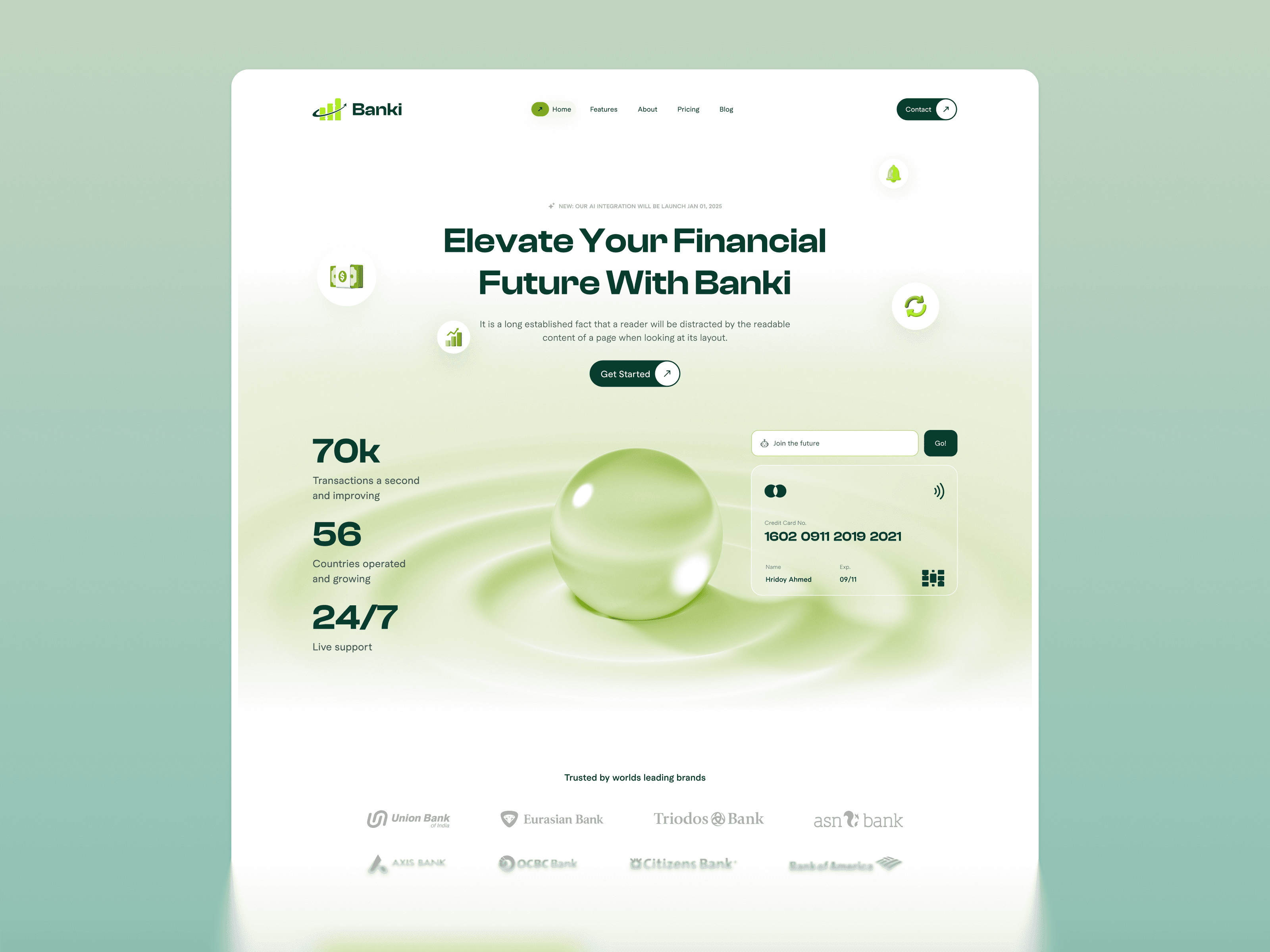
Banki is purpose-built for fintech startups, financial SaaS products, and any early-stage company building in the financial services space. Fintech products carry a higher trust burden than almost any other startup category — your potential users are deciding whether to trust you with their money, their financial data, or their business operations. Generic startup templates fail for fintech because they communicate the right level of energy for a consumer app but entirely the wrong level of credibility for a financial product.
The design system communicates institutional reliability without sacrificing the modern, product-forward aesthetic that fintech buyers expect from an innovative new platform. Dashboard UI elements, financial data visualization components, and security signal placement throughout the page work together to establish the credibility a financial startup needs before a visitor will consider signing up or requesting a demo.
Best for: Fintech startup founders, banking and payments platform builders, financial automation SaaS products, investment and wealth management tools, expense management platforms, and any early-stage team building a product that handles financial data or transactions.
What's included:
Professional fintech design system with dashboard UI elements
Security and compliance signal placement throughout
Financial data visualization components in the hero and feature sections
Credibility-forward social proof section with user or partner logos
Transparent pricing structure with plan comparison
Trust-building FAQ section addressing security and compliance questions
Framer CMS blog section for regulatory updates and financial content marketing
Why it stands out: Banki solves the specific trust problem that every fintech startup faces — establishing enough credibility with a cold visitor to get them past the skepticism stage and into genuine product evaluation. The dashboard UI elements and financial data visualization in the hero give visitors an immediate visual anchor for what the product does and how it handles their data, which is the conversion-critical first impression that most fintech landing pages fail to deliver. For any startup building in financial services, Banki is the most domain-appropriate and trust-engineered template in the Pentaclay library.

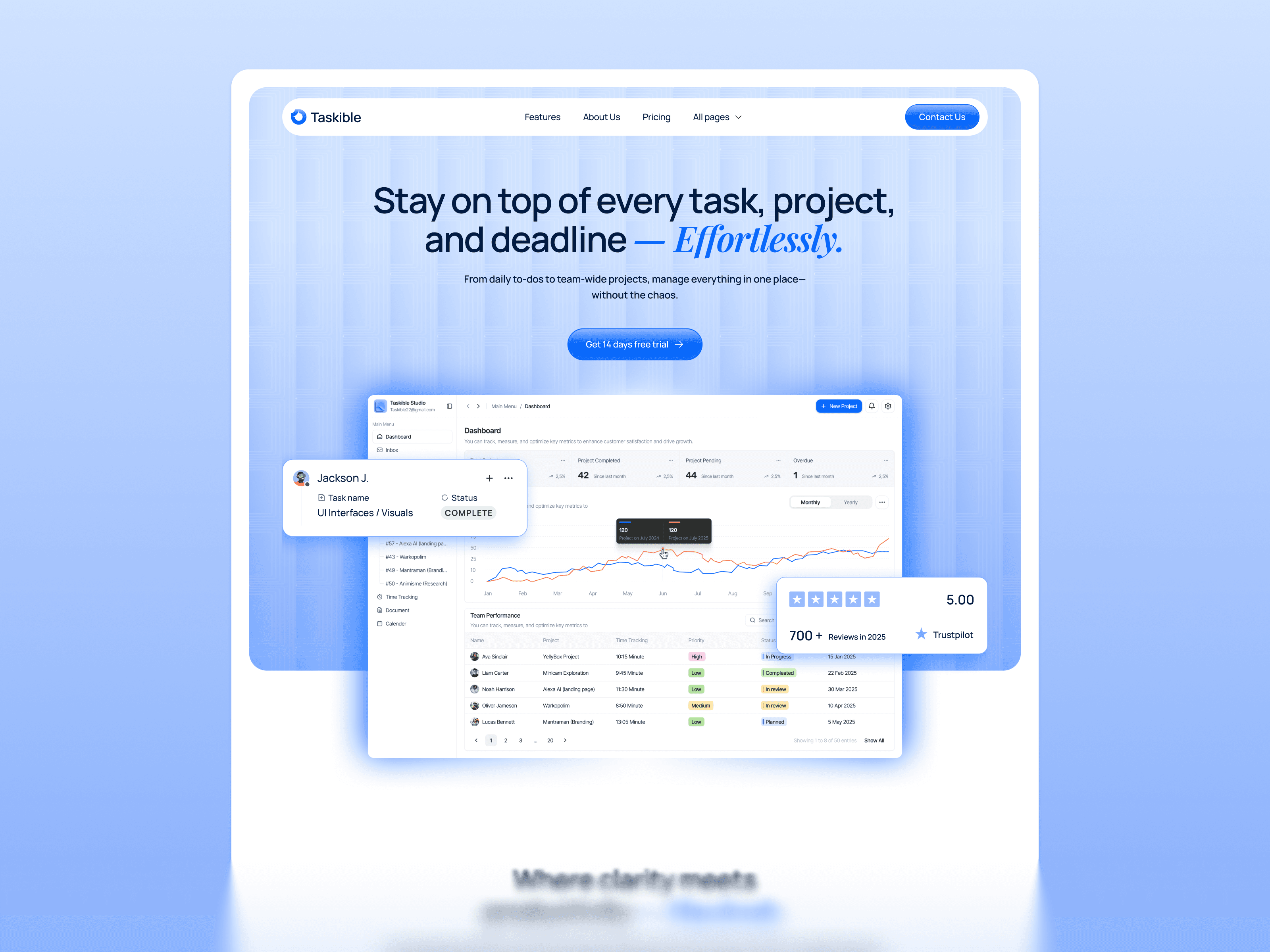
Taskible is built for productivity SaaS products, task management platforms, and workflow tools — the startup category where the conversion challenge is not explaining what the product does but convincing a visitor who already uses three other productivity tools that yours is the one worth switching to. The template is structured around that specific conversion challenge: demonstrating workflow efficiency, showing the product UI in context, and presenting the switching benefit clearly before the visitor bounces back to their current tool.
The design system is clean, focused, and deliberately uncluttered — because a productivity tool whose website is chaotic and overwhelming is communicating exactly the wrong message about what using the product will feel like. The layout reflects the same organizational clarity that the product itself promises to deliver.
Best for: Task management SaaS startups, productivity tool founders, project management platform builders, team workflow tools, personal productivity apps, and any startup whose product promise is saving time, reducing friction, or bringing order to complexity.
What's included:
Clean, focused design system reflecting the organizational clarity of a productivity product
Product UI showcase section with workflow demonstration context
Feature breakdown structured around efficiency and time-saving outcomes
Before-and-after or comparison section showing switching benefit
Social proof with user productivity metrics and testimonials
Pricing table with individual and team plan comparison
Framer CMS blog section for productivity content marketing
Why it stands out: Taskible is the right template when your startup's conversion challenge is differentiation rather than education. In the productivity SaaS category, visitors already understand the product category — they need to understand why yours is worth switching to. Taskible's page architecture is specifically structured to answer that question by demonstrating workflow efficiency through the product UI showcase, presenting the switching benefit through outcome-led copy sections, and building trust through productivity-specific social proof.

Gilberto is for AI and SaaS startups that want their website to communicate the same level of sophistication as their product. The hero demonstrates exactly the kind of capability-led positioning that works for AI and productivity startups: it names what the product does and names the outcome without spending fifty words explaining the mechanism. The supporting visual system — a deep purple-toned dark design with multi-panel UI showcase — gives Gilberto an enterprise-grade aesthetic that most early-stage startups cannot achieve from scratch.
The platform stats section with user count and integration numbers gives early-stage founders a structural framework for communicating traction at whatever scale is accurate for their product. Even a modest number of users presented in the right visual context communicates that the product is real and in use — which is the credibility threshold most cold visitors need to cross before they will consider signing up.
Best for: AI writing and productivity startups, workflow automation SaaS products, content intelligence platforms, AI-native startups with a strong visual brand identity, and any SaaS founder who wants their site to communicate technical sophistication and product depth immediately upon landing.
What's included:
Deep dark design system with purple accent tones and editorial typographic hierarchy
Multi-panel product UI showcase demonstrating the product across multiple contexts
Platform capability and integration count social proof section
User stats and traction metrics display
Pricing section with plan comparison layout
Testimonials and credibility sections
Framer CMS blog support for content marketing
Why it stands out: Gilberto stands apart from most dark SaaS templates because it has a genuinely distinctive visual identity rather than just a dark background with neon accents. The multi-panel UI showcase section is the single most effective structural element for early-stage SaaS startups — it shows the product working across multiple contexts simultaneously, communicating feature depth to a visitor who has not yet had a demo and may never request one. At $79 it is the right investment for any AI or SaaS startup where the website's visual sophistication is itself a conversion signal.

Chatpilot is the most purpose-specific template in the collection — built exclusively for conversational AI products, chatbot platforms, and AI agent builders. The hero is the most direct startup headline in the collection: it names the product type, names the primary benefit, and removes the biggest objection all in a single line. There is no ambiguity about what this startup does, who it is for, or why a visitor should keep reading.
The dark terminal-style design system with bold accent tones is immediately recognizable as developer-adjacent — the right visual register for a chatbot or AI agent product where the primary buyer is a technical founder, a product lead, or a developer advocate who evaluates tools by their capability and integration depth rather than by marketing presentation.
Best for: AI chatbot startup founders, conversational AI platform builders, AI agent product teams, customer support automation startups, developer-tool founders building chat-based interfaces, and any early-stage team whose core product experience is a dialogue or conversation interface.
What's included:
Dark terminal-style design system with bold accent tones
Chat interface UI showcase visible in the hero section
Impressive metrics section for social proof through operational numbers
Step-by-step product explanation section showing how the AI agent works
Feature and capability breakdown in structured visual format
Integration and partner showcase section
Framer CMS support for blog and product update content
Why it stands out: Chatpilot solves the hardest problem in selling a conversational AI startup — making an abstract product experience concrete before a visitor has to request a demo. The chat UI visible in the hero, combined with the step-by-step explanation section and the operational metrics section, gives a first-time visitor three separate forms of product proof before they have scrolled halfway down the page. For any conversational AI or chatbot startup, Chatpilot is the only template in this collection built specifically around your product type, your buyer's evaluation process, and the specific credibility signals that convert in the AI agent market.
How to Choose the Right Framer Startup Template
The decision comes down to three factors: your product category, your primary buyer, and the visual identity your brand needs to establish from the very first impression.
If you are building a B2B SaaS or business productivity platform — Systema is your strongest starting point. Its clean, authoritative design system communicates reliability and structure to business buyers who evaluate software on professionalism before features.
If you are building in the crypto or Web3 space — Cryptoclay is the only template in this collection purpose-built for the trust and visual language demands of the crypto market. Using a generic SaaS template for a Web3 product is a credibility signal in the wrong direction.
If your startup is a creative tool or design-forward product — Redient is the right choice. Its bold editorial design system demonstrates aesthetic quality before a visitor reads a single word, which is the correct conversion sequence for a creative product.
If your product serves multiple audiences or your positioning is still evolving — EventIQ provides the most structural flexibility. It is the right investment when a narrow, opinionated template would feel restrictive for a product that is still finding its market fit.
If you are building a fintech or financial services startup — Banki is purpose-built for the specific trust requirements of financial products. The dashboard UI elements and security signal placement are designed specifically for buyers who are evaluating whether to trust you with their financial data.
If you are building a productivity or task management SaaS — Taskible is structured specifically around the differentiation challenge in the productivity category. Its page architecture is built to answer the switching question that every productivity tool visitor is asking.
If you are building an AI writing, content, or workflow SaaS startup — Gilberto's visual sophistication and multi-panel UI showcase communicate product depth immediately. The right investment when your website's design quality is a direct signal of your product's quality.
If you are building a chatbot, AI agent, or conversational AI startup — Chatpilot is the only template here built specifically for dialogue-driven product experiences. Every section is purpose-built for your product type and your buyer's evaluation process.
On licensing: all templates are available as single-site licenses at $79. If you are building more than two startup sites or managing a portfolio of products, the All Access plan at $169/year covers unlimited websites across the entire Pentaclay Framer library — making the per-project cost significantly lower than individual purchases.
Frequently Asked Questions
What are the best Framer startup templates?
The strongest options in the Pentaclay library for startups are Systema, Cryptoclay, Redient, EventIQ, Banki, Taskible, Gilberto, and Chatpilot — each built for a different startup type and primary buyer. Systema is the most versatile starting point for B2B SaaS startups. Chatpilot is the only one built specifically for conversational AI products. Banki is the strongest choice for fintech and financial service startups.
Can I launch an MVP using a Framer startup template?
Yes. All templates here are no-code, fully customizable in Framer's visual editor, and include every structural element a startup MVP site needs — hero, features, social proof, pricing, and CTA. A focused customization pass updating copy, swapping images, and adjusting brand colors gets most founders from purchase to a publish-ready site in a weekend without requiring a developer.
Do Framer startup templates support SEO?
All Pentaclay templates are built with clean HTML structure, semantic heading hierarchy, and performance-optimized code that supports Framer's native SEO settings. You control title tags, meta descriptions, and canonical URLs at the page level. For startups investing in content marketing, templates with Framer CMS blog sections give you the structure to build SEO authority from day one.
Are these templates suitable for SaaS startups specifically?
Yes. Systema, EventIQ, Gilberto, Taskible, and Chatpilot are all specifically designed or well-suited for SaaS startup websites — with pricing tables, feature sections, integration showcases, and CMS blog support built in. The template descriptions above identify the specific SaaS categories each one serves best.
Do I need a Framer subscription to publish my startup site?
Yes — a Framer hosting plan is required to publish on a custom domain. Framer's Basic plan ($15/month) covers a single site with custom domain and CMS support, which is the recommended plan for most startup sites. The template purchase is a one-time cost separate from the Framer hosting subscription.
How long does it take to customize and launch a Framer startup template?
For a focused customization pass — updating copy, swapping images, adjusting colors to match your brand — most founders report 4 to 8 hours to a publish-ready state. A full customization including new sections, additional pages, and Framer CMS configuration typically takes a weekend. No developer required.
What is the difference between a single license and All Access?
A single-template license covers one website at a one-time price of $79. The All Access plan at $169/year covers unlimited websites across the entire Pentaclay library — 50+ Framer templates, 15+ Webflow templates, and 60+ Figma templates. All Access is the best value if you are building more than two sites or managing a portfolio of startup products.
The eight templates on this page — Systema, Cryptoclay, Redient, EventIQ, Banki, Taskible, Gilberto, and Chatpilot — cover the full spectrum of startup types that Framer serves well: B2B SaaS and business platforms, crypto and Web3 products, creative and design-forward tools, multipurpose SaaS platforms, fintech and financial products, productivity and task management tools, AI writing and workflow software, and conversational AI products.
All eight have live previews of every page. Browse, compare, and buy when you are ready — or unlock unlimited access with the All Access plan at $169/year.
👉 Browse all Framer startup templates · See best Framer SaaS templates · Compare best Framer AI templates